
Research Article - (2025) Volume 11, Issue 1
A roommate relationship is significant for psychological well-being and a platonic roommate relationship has the potential to provide an environment in which an individual can flourish in academics, social life and work life. The ensuing paper addresses issues pertinent to stakeholders in co-living spaces. It intends to frame intervention strategies that roommates can use to strengthen their roommate relationship and avoid roommate conflicts. The paper addresses the importance of roommate relationships, factors affecting roommate relationships, the reasons for roommate disputes and their impact on an individual's life. Moreover, personality type forming a good roommate relationship has also been discussed. The paper derives from an in-depth study of existing literature and endeavors to enhance the well-being of an individual by addressing roommate concerns and ameliorating roommate relationships.
Platonic relationship • Compatibility • Compatible relationship • Roommate • Flatmate • Room/Flatmate conflict
India’s millennial population accounts for 426 million people, covering 34% of the PAN India population, out of which 68% of millennials live in leased housing. An increasing number of young adults are stepping out of their homes and looking for affordable accommodations. Young adults who move to larger cities for jobs or education face uncertainties of high rents, stringent landlords, security deposits, and many more. Hence, they end up with the most workable option of shared accommodation/housing like Paying Guests (PG), hostels and serviced flats. As a result, sharedliving providers (including universities) randomly place individuals with strangers, thereby assigning them to untailored roommates. There can be two probable outcomes of this random allocation of roommates-roommate relationship might turn into solid friendships, pleasant connection and contentment with the roommate or might cause discontentment, tension, roommate conflict and shades of apathy amongst them.
Importance of roommate relationship
Roommates indulge in various activities and interpersonal interactions. According to college students often encounter problems maintaining mature interpersonal interactions. Arnett claims that a roommate is not just someone with whom you share a refrigerator rather a roommate significantly influences an individual’s health, academics, and social attitudes. Interpersonal bonds with roommates are crucial for the psychological growth of college students as students spend more time with roommates than with friends. According to empirical studies, roommate conflict affects the well-being and performance of an individual in academic or work-life settings. Pascarella and Terenzini asserted that institute accommodations have the potential to furnish an environment that may assist students in flourishing academically and socially [1].
Social closeness and roommate relationship
The two most significant concepts in engulfing human relationships are closeness and intimacy. People establish relationships to satisfy their vital needs for closeness, selfaffirmation, and companionship.
Computer mediated communication’s unique framework encourages self-disclosure, trust, and intimacy, all of which are essential for developing deep bonds, particularly among youngsters.
Roommates who turn out to be friends
Emerging adults are likely to face several difficult interpersonal situations when it comes to maintaining quality same-gender friendships. Although little research has been done on the problems that arise in adult friendships, theory and research with children and adolescents and studies of adult romantic relationships suggest that problems are likely to arise. Conflict is defined as interpersonal situations in which two people openly oppose each other, is common in friendships. Disputes with friends are a feature of adolescents’ daily lives; some may be conflicts; such as disputes about evening plans. Importantly, how people handle a disagreement with friends or romantic partners affects the quality of their relationships [2].
Personality types as a predictor of good roommate relationship
Personality traits have been shown to play a significant role in the initiation, formation, quality, maintenance, and dissolution of friendship relationships. Agreeableness is a strong predictor of friendship satisfaction and peer acceptance, similar to romantic relationship fulfillment. Thus, we expect that agreeableness will be an essential predictor of roommate satisfaction.
It was also found that extraversion was a significant predictor of satisfaction with friendships in previous studies. Extraverts form more friendships, have closer relationships with their friends, are more popular, and have more prestige among peers than introverts. These findings suggest that extraversion may play a role in interactions with a roommate.
Conscientiousness promotes a compact but optimistic influence on the emergence of friendship and satisfaction. It plays a prominent role in maintaining platonic relationships, as indicated by emotional support and conflict resolution techniques. Individuals who exhibit high conscientiousness have higher social competence, optimistic social behavior, and less insecurity. According to Cemalcilar et al., the perceived similarity between individuals high in conscientiousness promotes interpersonal attraction and compatibility. Individuals who exhibit high openness to experience have higher levels of interpersonal attraction. However, according to Yuan, compatibility in terms of personality does not guarantee harmonious relationships between individuals [3-5].
Platonic Relationships
The concept of platonic relationship has its origins in the ideas of Plato, the ancient philosopher and the term ‘platonic’ has been derived from his name. The term refers to the ‘close friendship,’ which can apply to the opposite and same-gendr friends. In a platonic relationship, people share a close bond but do not have a sexual relationship with each other. Honesty marks platonic relationships, acceptance, understanding and proximity, and closeness.
Platonic relationships enhance the well-being of an individual, providing them with love and support, lower levels of stress, and increased resilience. Cherry also described types of platonic relationships.
• Bromance-close, affectionate and non-sexual relationship between men.
• Womance-affectionate yet non-romantic bond between women.
• Work spouse-close but non-sexual relationship between coworkers.
Roommate relations can turn into platonic relationships by spending some quality time together via travel, conversation, shared interests and activities.
Roommate conflict
Conflicts between roommates are not uncommon nowadays. For example, 44.1% of men and 50.1% of women have had difficulties with roommates.
According to West et. al., roommates with more in common and similar interests contribute to building better relationships. In contrast, those with fewer common interests do not form lasting friendships. People who believe they are similar to their roommates claim to have a more robust social bond and affinity with them. Complementarity assumes that as members of a dyad interact, they gather knowledge from and about the other person that affects future interactions.
When two people’s interactions are complementary, their association is hypothesized to be more secure, durable, and rewarding. Complementarity has been discovered in somewhat longer-term interactions at the level of global, stylistic features. According to Bahns, Crandall, Canevello and Crocker, poor communication between roommates is also one of the reasons for the termination of roommate relationships.
A roommate relationship is significant for psychological well-being and a platonic roommate relationship has the potential to provide an environment in which an individual can flourish in academics, social life and work life. Therefore, the study intends to frame interventions that roommates can use to strengthen their roommate relationships and avoid roommate conflicts [6-9].
The researchers proposed the interventions being called:
• C.H.E.R.I.S (a French word for cherish) (Table 1 and Figure 1).
• C.A.M.A.R.A.D.E.R.I.E (Table 2 and Figure 2).
| Acronym | Meaning | Interventions |
| C | Companionship | Roommate relationship can be more stimulating companionship or exciting with roommate by executing following activities: |
| Playing indoor/outdoor games with your roommate | ||
| Celebrating festivals together (can have pre-celebrations). | ||
| Â Giving the roommate his/her personal space. | ||
| Celebrating the minor achievements of the roommate. | ||
| Sometimes giving appreciation notes to the roommate. | ||
| H | Help | Roommates can provide help to each other and strengthen their relationship by executing following activities: |
| Helping the roommate to learn or develop new skills which he/she is trying to do. | ||
| Motivating the roommate to spend some time on activities he/she likes to do. e.g. If he/she is fond of drawing, gift them colors and drawing sheet. | ||
| Helping them by selecting clothes for a party or a date. | ||
| Helping them in daily living chores like cleaning and cooking. | ||
| Collect their parcel if he/she is not there. | ||
| Take care of them when he/she is unwell. | ||
| Keep a constant check on their mental health. | ||
| E | Emotional security | By implementing the following activities one can provide comfort and support to the roommate: |
| Recognizing their efforts. | ||
| Creating space for positive feedback and criticism with them. | ||
| Making them feel comfortable by building rapport without judgment. | ||
| Respecting their values and emotions. | ||
| Don't make fun of their embarrassing moments. | ||
| Giving them a hug. | ||
| Apologizing if any of your actions hurt him/her. | ||
| Writing 5 things that you like best about the roommate and share it with him/her. | ||
| R | Reliable alliance | Your roommate can count on your availability and loyalty by executing following things: |
| Follow through on your promises that you made with them. | ||
| Make time for your roommate. | ||
| Give credits or recognition to your roommate. | ||
| Never break a roommate pact. | ||
| Do not play the blame game with your roommate. | ||
| Tolerate your roommate’s tantrums sometimes, especially when he/she is not in a good mood. | ||
| Be there with your roommate if he/she is going through a tough time. | ||
| Establish trust and respect | ||
| Keep your commitments. | ||
| Resolve conflicts with urgency. | ||
| I | Intimacy | Create a bond with a roommate so that he/she can express her feelings and thoughts by implementing the following activities: |
| Actively listening to what your roommate shares. | ||
| Sharing your secrets with your roommate. | ||
| Signing up for workshops or classes on topics that interest you and your roommate. | ||
| If you go on a long action: a) Stay in touch with your roommate; b)Bring him/her a souvenir. | ||
| Reach out to your roommate to share a funny joke that you think he/she will enjoy. | ||
| Take photos with your roommate. | ||
| Sing and dance together with your roommate. | ||
| S | Self-validity | You can help your roommate to maintain an optimistic self-image about himself or herself by carrying out following activities: |
| Ask your roommate to look for the intrinsic drying force. | ||
| Solicit your roommate to identify his/her strengths and weaknesses. | ||
| Solicit your roommate to keep a track of his/her own progress, effort and success. | ||
| Urge your roommate to be self-aware. | ||
| Importune your roommate to prioritize his/her own needs. | ||
| Importune your roommate to treat himself/herself with kindness. | ||
| Tell your roommate to accept his/her limitations and flaws. Nobody is perfect. | ||
| Tell your roommate that their self-worth is not based on people’s opinions. | ||
| Make your roommate understand that he/she handles her own choices or decisions. | ||
| Assess your roommate in processing emotions through journaling. |
Table 1. Interventions for enhancing friendship language through the C.H.E.R.I.S model.
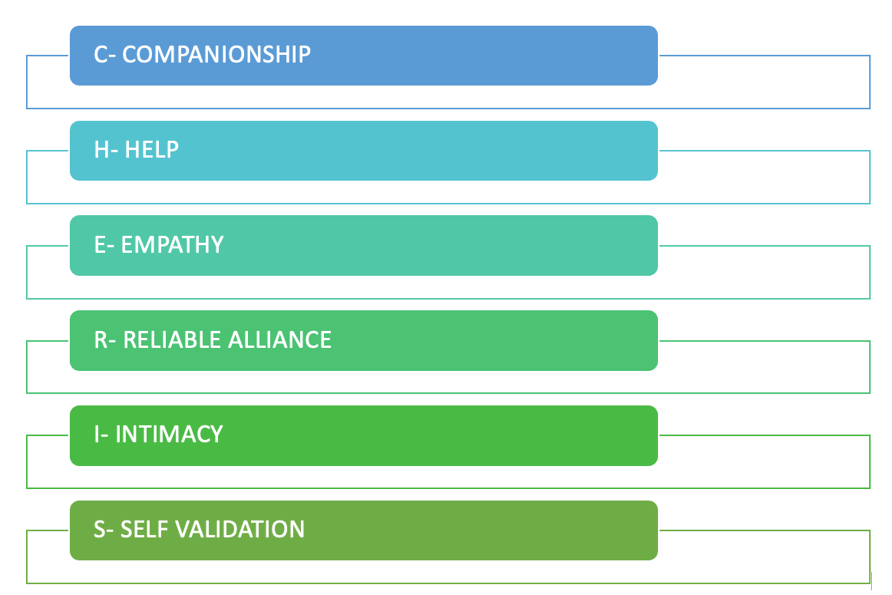
Figure 1. The mnemonic code for the proposed intervention via C.H.E.R.I.S.
| Acronym | Meaning | Interventions |
| C | Communication is the key | Have quality communication with your roommate at least once a day. |
| Talk out regarding any issue that arises. | ||
| Communicate gratitude to the roommate by telling him/her the reason for your appreciation for them. | ||
| A | Avoid backlashing | Be straightforward with your roommate, but keep your words short and sweet. |
| M | Maturely handling the issues | If you fight with your roommate, don’t feel excessively guilty about it. |
| Talk and resolve your issue. | ||
| A | Acknowledging pessimistic thoughts | Acknowledge negative thoughts about your roommate and try replacing them with optimistic ones. |
| R | Regulating important tasks | Plan study time with your roommate. |
| Practice punctuality with your roommate. | ||
| Practice mindfulness meditation with your roommate. | ||
| Fix a time for work out. | ||
| A | Always be a good listener | Listen to your roommate with full interest without surfing the net or checking your phone in between. |
| D | Differing opinions | Fight the urge to react in anger when you hear differing opinions from your roommate. |
| Take a moment and realize that everyone has different opinions. | ||
| E | Empathy | Be empathetic with your roommate and practice phrases like: |
| I know how you feel. | ||
| I’m sorry to hear that. | ||
| I feel bad for you etc. | ||
| Refrain from giving advice until asked by your roommate. | ||
| R | Respond and reciprocate generosity | Respond and reciprocate to your roommate with love, acceptance, care, gratitude and modesty. |
| I | Involve in leisure activities | Schedule activities with your roommate e.g.: watching movies on Friday night, shopping on Sunday. |
| E | Experience novelty | Go to new places and try new things with your roommate. |
Table 2. Interventions for enhancing roommate relationship via C.A.M.A.R.A.D.E.R.I.E model.
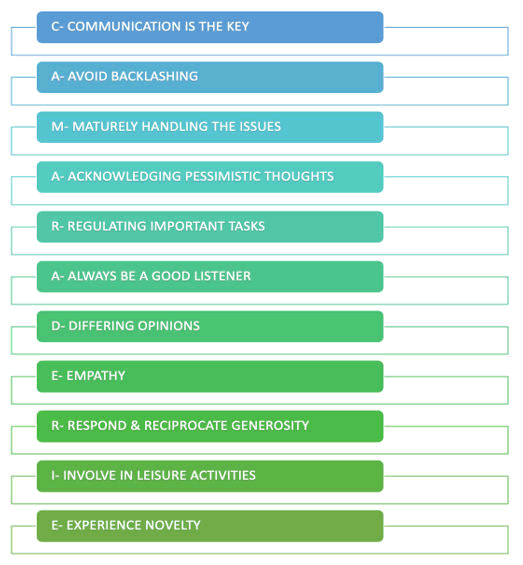
Figure 2. The mnemonic code for the proposed intervention via C.A.M.A.R.A.D.E.R.I.E.
The intervention strategies presented in the study can be executed to strengthen the roommate relationship. Roommate disputes can also be resolved by implementing these intervention strategies and better roommate relations can evolve. Those who already have a good roommate bond can apply these intervention strategies to maintain that bond. It will be much simpler to create a comfortable living environment for everyone, if one can communicate properly, bearing in mind the interventions presented in this paper. It is important to remember that an intervention is not the same as a confrontation. The intervention may appear to be nothing more than a lengthy conversation, but the more time one spends deliberately discussing it, the less likely everyone participating will feel trapped.
The present paper is completely qualitative in nature and is based on empirically present common phrases and facts. With the help of available secondary inputs on numerous websites, articles, journals and papers; the mentioned intervention strategies were determined.
With the sole purpose of easing a co-living atmosphere and promoting mental as well as holistic well-being of any individual every figures and activities are suggested here.
In the world of uncertainty and ever evolving strata of one’s life, there is a need for a service to promote healthy lifestyle at least in one aspect of one’s life which is “shared accommodation”. Elucidating upon this fact, the present paper is compiled.
Room/flatmates are not some passive co-liver; rather, as suggested in many studies, they equally mould ones behaviour, lifestyle and wellbeing. With an aim to keep this room/flatmate relationship hassle free and devoid of serious conflicts, we provide here some strategies to improve roommate relationships through personality based intervention strategies.
[Crossref] [Google Scholar] [PubMed]
[Crossref] [Google Scholar] [PubMed]
Received: 29-Aug-2024, Manuscript No. CEP-24-146834; Editor assigned: 02-Sep-2024, Pre QC No. CEP-24-146834 (PQ); Reviewed: 16-Sep-2024, QC No. CEP-24-146834; Revised: 29-Jan-2025, Manuscript No. CEP-24-146834 (R); Published: 05-Jan-2025, DOI: 10.35248/2471-2701.25.11(1).001-006
Copyright: © 2025 Bhatra A. This is an open-access article distributed under the terms of the Creative Commons Attribution License, which permits unrestricted use, distribution, and reproduction in any medium, provided the original author and source are credited.