Hotmail - Hotmail login
Hotmail was one of the world's most popular email providers, although it has been discontinued in favor of Outlook.com by Microsoft in 2013. Existing Hotmail emails can still be used within the Outlook platform. Millions of people continue to use they're @hotmail.com, @live.com, @msn.com, and @outlook.com email addresses to communicate, conduct business, bank online, shop, connect socially and use Microsoft services.
The Hotmail brand is now Outlook, but the email addresses used for Hotmail are still active and function exactly as before. While users will enjoy Outlook's new look, improved security features, cloud storage integration, and easy access to Microsoft services, they can continue to log in with their existing email addresses and passwords.
Hotmail Login
Hotmail Login means a secure authentication system to gain access to the Microsoft email account with the registered email address and password. Though Hotmail is now Outlook.com, users of an existing Hotmail account will not need to create a new Hotmail account as Hotmail is working perfectly.
Once you log in successfully, you will not only have access to your email, but many other Microsoft services that are linked to your account. In the single sign-in system, users can switch between Outlook Mail, OneDrive, Microsoft 365, Teams, Skype, Xbox, Calendar and Contacts without logging in to each service individually.
It doesn't matter whether your email address is @hotmail.com, @live.com, @msn.com or @outlook.com; the login procedure is the same as all these email domains are handled under a single account system for Microsoft.

Hotmail Login Requirements
Before signing in to your Hotmail account, make sure you have:
Your Hotmail, Live, MSN, or Outlook account email address.
The password to your Microsoft account.
A secure internet connection.
The latest version of the web browser or the Outlook application.
If you have two-step verification enabled, access to your recovery phone number, recovery email or Microsoft Authenticator.
These details enable a seamless and secure sign-in process.
Hotmail Account on Computer
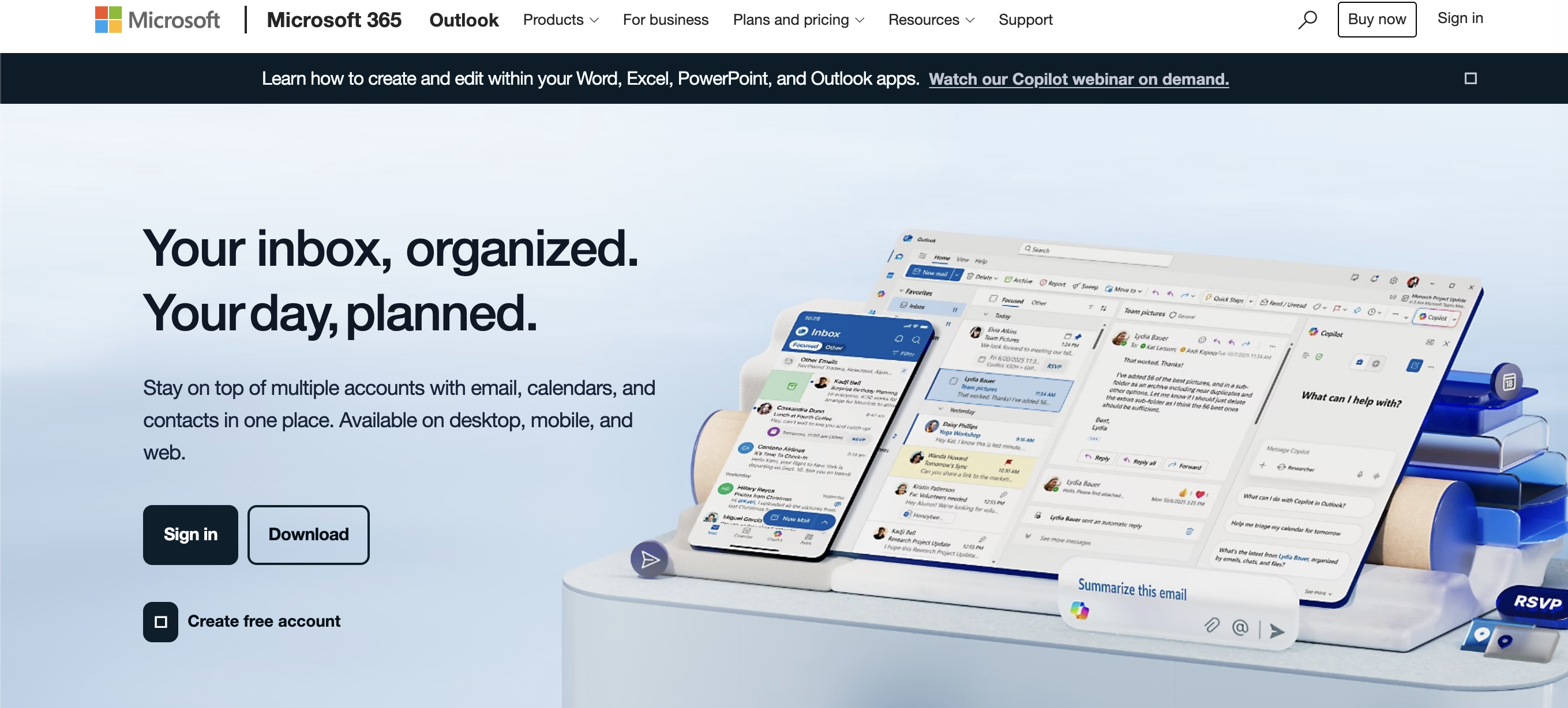
Choose an Internet browser like Google Chrome, Microsoft Edge, Mozilla Firefox, or Safari and enter the Outlook sign-in page. Another easy method is to type hotmail.com or outlook.com, which will redirect you to Microsoft's secure login site.
To log in, select Sign In at the top right of the homepage.
Type your Hotmail email address (e.g., your name@hotmail.com, @live.com, @msn.com, or @outlook.com) and click Next.
Type the password for your Microsoft account carefully.
Check that Caps Lock is off and make sure you are entering the right password.
Tap Sign in to continue.
If Two-Step Verification is turned on for your Microsoft account, sign in to the account using your recovery code from your cell phone, recovery email address, or the Microsoft Authenticator app. Select "Yes" if you're using your computer of trust.
When using a public, school, or shared computer, select NO to help maintain the security of your account.
Once you're authenticated, your Outlook inbox will open, giving you access to your calendar, contacts, folders, and emails, including attachments.
Hotmail on an Android Phone
If you don't have the Microsoft Outlook app, download and install it from the Google Play Store.
Open the Outlook application and tap Add Account or Get Started. Enter your Hotmail or Outlook email address, and tap Continue.
Enter the password of your Microsoft account and click Sign in.
If two-factor authentication is turned on, please confirm through the Microsoft Authenticator app, text message, or backup email.
After verification, the Outlook app will automatically sync your emails, contacts, and calendar events.
You can also sign in from a mobile browser by logging into Outlook.com and then proceed with the same login process.
Hotmail on an iPhone or iPad
Apple users can access their Hotmail account via the Microsoft Outlook app or the inbuilt Mail app.
Using the Outlook App
Open the Apple App Store and install Microsoft Outlook.
Tap Add Email Account on the app.
Type your Hotmail email address and click Continue.
Enter your Microsoft account password.
Finish the two-step verification if required.
Your email, calendar, contacts, and attachments will be synchronized, and you will have access to them in your inbox.
Using Apple Mail
You can also add your Hotmail account to the iPhone or iPad's built-in Mail app.
Go into Settings and select Apps > Mail > Mail Accounts.
Click Add Account, then select Outlook.com.
Enter your password and Hotmail email address.
If asked, finish the (Microsoft) verification process.
Choose the data you wish to synchronize, including Mail, Contacts, Calendars, and Notes.
Tap Save to finish the setup.
You should now see your Hotmail account in the Mail app with all the others.
Hotmail Sign in With Two-Step Verification
One of the best security features you can have for your Hotmail account is Two-Step Verification or 2FA. It provides an additional layer of security by asking for another method of authentication, apart from your password, when you log in from another device, browser, or location. If a user does discover your password, he or she will not be able to log into your account without going through the second verification process.
Two-Step Verification is recommended by Microsoft for all Hotmail, Outlook, Live and MSN accounts to secure sensitive information, emails, contacts and files in OneDrive.
How Hotmail Two-Step Verification Works
Two-Step Verification adds an extra security measure to the sign-in process when activated.
Navigate to the official Microsoft sign-in page, and then type your Hotmail email address.
Enter your Microsoft account password and press Sign in.
Microsoft will identify if you're signing in from a trusted or new device.
If further identification is needed, you will be asked to confirm your identity by repeating the verification method that you selected.
Finish verification to access your inbox and other Microsoft services securely.
This extra layer of protection will help prevent unauthorized access even if you have had your password stolen.
Verification Methods You Can Use
Microsoft has a number of methods to verify your identity when you sign in.
Microsoft Authenticator App
The most convenient and secure verification method is the Microsoft Authenticator app. When you log in, you will receive a message on your mobile device. Just allow the request or type the verification code shown on the screen to log in.
SMS Verification
A security code is sent to you once to your registered cellphone number by Microsoft. On the sign-in page, enter the code to confirm ID.
Recovery Email
You can also receive a verification code through your registered recovery e-mail address. Check your email, and copy the code to finish the sign-in.
Security Key
A compatible USB, NFC or Bluetooth security key can be used for additional security. This passwordless authentication is particularly beneficial to those who seek maximum account security.
How to Enable Two-Step Verification
You can set up Two-Step Verification in your Microsoft account security settings.
Log in to your Microsoft account. Select the Security section.
Click on Security.
Click on Advanced Security Options.
Look for the Two-Step Verification option and click on Turn On.
Click on the screen to select the verification method you want to use.
Complete the setup and save your changes.
Benefits of Signing In to Your Hotmail Account
Logging in your Hotmail account can access all sorts of Microsoft services and features, and it's far more than an email site. Some important advantages are:
Get email access from any web-enabled device.
Share files, contacts, calendar and inbox items between computers, smartphones and tablets.
Securely store and share files in OneDrive cloud storage.
Open Microsoft Word, Excel, PowerPoint and other Microsoft 365 apps online.
Use the Outlook calendar to keep appointments and reminders organized.
Use the same account to communicate via Microsoft Teams and Skype.
Use Microsoft's sophisticated security features, such as two-factor authentication and suspicious activity monitoring to protect your account.
Setting Up Microsoft Authenticator
One of the most secure methods to protect your account is by using Microsoft Authenticator.
To set it up:
Download the Microsoft Authenticator app on Google Play or the Apple App Store.
Log in to your Microsoft account.
Go to Security > Advanced Security Options.
Click Add a New Sign-In Method.
Choose an authenticator app.
Use the Authenticator app to scan the QR code on the computer.
Accept the test message.
Complete setup.
There will be no need to enter verification codes in the future; you can simply approve them with a single tap.
How to Reset Your Hotmail Password
Go to the hotmail sign-in page of Microsoft in your web browser.
Type in your Hotmail, Live, MSN or Outlook email address and press Next.
Click the Forgot password? link below the password field instead of typing your password.
Microsoft will require you to confirm your identity before you can set up a new password. You can get a verification code via your recovery email, mobile phone number, or the Microsoft Authenticator app, depending on your account settings.
Choose the verification method you want and ask for the security code.
Type in the verification code as given and press Next.
Generate a new password that's strong, unique, and hard to guess.
Microsoft suggests using upper- and lower-case letters, numbers, and special characters.
Repeat your new password and finish.
Go to the sign-in page and sign in with your new password.
After you change your password, you may need to log in again in all Hotmail accounts on your devices.
How to Recover a Hotmail Account
If you are unable to remember your password, don't have access to your recovery email, have changed your phone number or think that someone has used your account, Microsoft offers a way to recover your account to confirm your identity.
Navigate to the Microsoft account recovery page from the Microsoft sign-in page.
Write the Hotmail account's email address.
Enter an alternate email address to which Microsoft can send an email about your recovery request.
Fill in the CAPTCHA code to make sure you are not a robot.
Complete recovery form with as accurate information as possible.
Previous passwords, you remember.
Common email addresses that are accessed often.
Emails from the past few days, with the subject line.
The date of your birth (if you registered your account at this time).
All your Microsoft services, e.g., Skype, Xbox, and OneDrive.
Billing information for Microsoft subscriptions or purchases.
The more accurate the information you can provide, the higher the chances of successful account recovery.
Latest Features Available with Hotmail (Outlook.com)
AI-Powered Email Assistance
Microsoft has introduced AI-driven capabilities in Outlook that will make it more efficient to work with the app. AI can assist with drafting emails, summarizing lengthy conversations, structuring your inbox, and providing suggestions for responses, depending on the type of account and subscription you have.
Improved Security and Login Protection
Microsoft is actively improving account security to prevent users from being targeted by phishing attacks or unauthorized access. New enhancements include improved identity verification for sensitive actions, advanced phishing detection, suspicious login monitoring, and support for passwordless sign-in with the Microsoft Authenticator app or security keys.
Smarter Inbox Organization
Outlook has some helpful features for managing your email. The most helpful aspects of it are:
Pin essential emails to the top of your inbox.
Set a reminder to be alerted later.
Set up emails to send at a later time.
Organize messages with categories and flags.
Create rules to automatically sort incoming emails into folders.
Mark emails as Focused or Other to prioritize important emails.
The features will contribute to reducing inbox clutter and improving productivity.
Enhanced Search Experience
Microsoft has enhanced the Outlook search features to make it even easier to find emails, contacts, attachments, and calendar events.
Recent updates include:
More advanced search folders.
Better filtering options.
Faster search performance.
Folder-specific search.
Enhanced navigation that retains your previous location across folders.
Better Calendar Management
The Outlook Calendar keeps getting more productive.
Users can now:
Design and develop templates for meetings.
Add several categories to calendar events.
Organize meetings more efficiently.
Sync appointments between Windows, Android, iPhone, Mac, and the Web.
These options enable the users to plan their personal and professional schedule better.
Improved Email Composition
Microsoft has added a number of new tools to improve the email writing experience.
Recent improvements include:
Redesigned signature management.
Improved emoji and sticker picker.
Rich content insertion tools.
Better table editing.
Smarter formatting options.
Faster attachment management.
The upgrades assist in creating professional emails faster and easier.
Better Multi-Account Management
Outlook can simplify the task of switching between multiple Microsoft email accounts. New enhancements enable users to:
Transfer emails between two Outlook email accounts.
Use a single interface to access multiple inboxes.
Add shared folders to Favorites.
Sync accounts over various devices.
This is great for those who have their own personal, work, or school email account.
Cross-Device Synchronization
One of the main benefits of Outlook is that it can sync seamlessly between devices. Once signed in, your account will automatically sync:
Emails
Contacts
Calendar
Tasks
Notes
Attachments
OneDrive files
You can access this information from a Windows PC, Mac, Android phone, iPhone or any web browser without having to log in again.
Microsoft Ecosystem Integration
Your Hotmail account has more than just an email address. You can access a variety of Microsoft services with one Microsoft account, such as:
Outlook Mail
OneDrive
Microsoft Word Online
Excel Online
PowerPoint Online
OneNote
Microsoft Teams
Skype
Microsoft Store
Xbox Network
Microsoft 365
If you use one account throughout the Microsoft world, all of your files, settings, and data will continue to be synchronized, making it a consistent experience across devices
Common Hotmail Login Issues
Incorrect Email Address or Password
The most frequent login problem is entering an incorrect email address or password. Try the following:
Look for spelling errors in your email address.
Enter the correct password for the Microsoft account.
Please do not press Caps Lock.
Don't use an autofill when entering your password.
Use the Forgot Password if you can't remember your password.
Forgot Your Password
You can reset your password via Microsoft's recovery process if you have forgotten your password.
Select "Forgot password" from the login screen.
Confirm your identity by email, phone, or Microsoft Authenticator.
- Click "Sign In" once again after creating a new password.
Two-Step Verification Problems
In case you are not getting any verification codes or requests of approval:
Test the internet and cell phone signals.
Look in your spam bin for a confirmation email.
To accept, open your Microsoft Authenticator app.
If possible, use another method of verification.
Account Locked
If you enter incorrect logon information multiple times or if there is suspicious activity, your account may be temporarily disabled by Microsoft.
To regain access:
Wait a couple of minutes before you try again.
Finish up Microsoft's identity check.
Reset your password if prompted.
Browser Problems
Hotmail may not load properly in some cases due to browser problems. Try these steps:
The cache and cookies in your browser should be deleted.
Update your browser.
Disable unnecessary extensions.
Use an Incognito window or a different browser.
Microsoft Server Issues
Hotmail Login may be temporarily down due to Microsoft. If this happens:
Wait several minutes and repeat.
See if Microsoft's service is up.
Avoid repeatedly refreshing the login page.
Browser and Outlook Sync Issues
When emails are not syncing correctly, a problem can be caused by the Internet connection, app settings, or Outlook configuration.
Emails Not Syncing
If you are not seeing your new e-mails:
Test the Internet connection
Refresh your inbox
Restart the Outlook app
Remove and add accounts as necessary
Outlook Desktop Not Updating
If Outlook on Windows or Mac is not syncing:
Verify that you are connected to the internet.
Exit Work Offline mode.
Update Outlook.
Restart the application.
Mobile App Sync Problems
If Outlook app is not synced on Android or iPhone:
Make sure you have the Outlook app updated.
Allow background data and notifications.
Restart your device.
If the problem persists, delete and reconnect your account.
Frequently Asked Questions (FAQs)
How can I access my Hotmail account?
To sign-in to your Hotmail account, go to the official Microsoft Outlook sign-in page, type the address of your email account (e.g., your @hotmail.com, @live.com, @msn.com, or @outlook.com account), and then click Next. Type a password and complete any required Two-Step Verification. After authentication, you will be taken to your Outlook inbox.
Is Hotmail still available?
Yes. While Microsoft has changed the name of Hotmail to Outlook.com, users with their @hotmail.com email addresses have been able to use them seamlessly. Users can still access their Hotmail accounts using the new Outlook features and security updates.
What is the official Hotmail login website?
Microsoft's sign-in page for Outlook is the official Hotmail page. You can also enter hotmail.com, outlook.com or outlook.live.com into the browser, and any of these links will take you to the official Microsoft login page.
Why can't I sign in to my Hotmail account?
There are multiple reasons why it might be difficult to login such as entering an incorrect password, forgot credentials, browser cache problems, expired sessions, Two-Step Verification issues, or temporarily locked Microsoft account. Typically, issues with logins are solved by checking logins and use Microsoft's recovery tools.
How do I reset my Hotmail password?
On the Microsoft sign-in page, click Forgot password and follow the steps to verify your identity with your recovery email account, phone number or the Microsoft Authenticator app. Once verified, you can establish a new password and gain access to your account.
How can I get my previous Hotmail account back?
Microsoft's Account Recovery form can be used to recover an old Hotmail account. Give correct data, like past passwords, recovery data, and regularly used email addresses, to confirm ownership.
Can I continue to use my previous email address, @hotmail.com?
Yes. Users are still able to use their old @hotmail.com email addresses, even though the service is now running via Outlook.com.
Does Hotmail support Two-Step Verification?
Yes. Microsoft provides Two-Step Verification through the Microsoft Authenticator app, SMS verification, a recovery email, or compatible security keys to help secure your account.
Why am I not receiving my Hotmail verification code?
There is a possibility that verification codes may not be received due to network problems, incorrectly recovered verification information, spam filtering or delays from your cell phone company. Look for Missed or Spam, confirm your recovery information and ensure that you have an internet or cellular data connection.
How do I stay signed in to my Hotmail account?
Do not select "Stay signed in" unless you are using a trusted personal device. Don't stay signed on to a public or shared computer to prevent your account from being accessed without your permission.
Conclusion
Hotmail continues to be one of the most trusted email services in the world, even after its transition to Outlook.com. No matter your @hotmail.com, @live.com, @msn.com, or @outlook.com address, your Microsoft account gives you secure access to your email, cloud storage, calendars, contacts, and a variety of Microsoft services with a single sign-in. Following the login process, enabling Two-Step Verification, maintaining updated recovery information, and practicing recommended security measures can help secure your account and provide a safe and reliable email experience on all devices.
Should you ever find yourself in a situation where you can't log in, or you've forgotten your password, Microsoft offers powerful password reset and account recovery capabilities that will help you regain access quickly. Outlook.com continues to be a reliable and robust platform for personal and professional communication with regular updates and AI-powered productivity tools, boasting compatibility with Windows, Mac, Android, iPhone and web. You can access your Hotmail account from home, at work and on the go and enjoy all its convenience, security and reliability just as millions of users do every day.