
Case Report - (2025) Volume 11, Issue 4
Precision medicine approaches using ex vivo Drug Sensitivity Testing (DST) have recently received attention in the cancer research community as a means to improve treatment stratification in populations where multiple treatment attempts are not feasible, or no standard treatment exists. This is particularly relevant for ultra-rare cancers such as osteosarcoma where population sizes preclude traditional prospective randomized clinical trials that can yield statistically meaningful data. DST has the potential to supplement existing patient stratification approaches by providing tumor-specific response data to aid in treatment selection at the time of treatment decision.
Here we present the case of a pediatric osteosarcoma patient who was evaluated using DST at the time of standard of care treatment. The DST screen indicated significant treatment sensitivity toward anthracyclines and methotrexate, consistent with the first-line standard of care therapy MAP. Consistent with the DST results, clinical follow up showed treatment sensitivity towards standard of care MAP treatment and pathology results of 90% necrosis.
The present case shows that DST screening is feasible from a technical standpoint, can be performed in a clinically relevant time frame that does not delay treatment start, provides personalized drug sensitivity information on clinically available agents and the DST results align with the clinical treatment response. Further evaluation of drug sensitivity testing is warranted to supplement current used methods for the treatment stratification of osteosarcoma patients.
Osteosarcoma • Drug sensitivity testing • Precision medicine
Osteosarcoma is the most common primary bone tumor but represents only 3% of childhood cancers [1]. Combination therapy with chemotherapy and surgery is the current standard of care. Overall survival at 5 years has plateaued at 60%-70% for newly diagnosed patients with localized disease and at 30% for patients with metastatic disease [1-4]. Treatment stratification based on next-generation sequencing has failed to elucidate which sarcomas are likely to respond to chemotherapy or correctly predict which drugs will be effective in treating a sarcoma patient [5]. Drug Sensitivity Testing (DST) has the potential to provide personalized plans based solely on the response of the specific patient’s tumor cells towards a library of anti-cancer agents. Using a patient’s tumor tissue for an ex-vivo drug screen can potentially identify favorable and unfavorable compounds for treatment of malignancies. We present the case of a pediatric patient with osteosarcoma whose tumor was evaluated using DST screening concurrently with standard of care treatment.
A 15-year-old male patient presented to medical attention January 2019 with left knee pain progressing from dull ache to pain with activity over the past year. Plain radiographs at the time of evaluation showed a left distal femur lesion with periosteal reaction and an MRI revealed a partially calcified mass with dimensions 11.1 cm × 4.1 cm × 3.1 cm arising from bone. The patient underwent biopsy of the left femoral lesion resulting in a diagnosis of highgrade osteosarcoma. Staging workup also revealed a 0.9 × 0.7 cm lesion concerning for metastatic disease in the left upper lobe of the lung. The patient began standard of care therapy with Methotrexate, Adriamycin, Cisplatin (MAP) chemotherapy per Children’s Oncology Groups (COG) protocol AOST0331 in February 2019. After 2 cycles of MAP, the patient underwent surgical resection in April 2019 with limb salvage surgery and mega-prosthesis placement. Pathology showed >90% tumor necrosis and negative margins. The patient received 4 cycles of adjuvant MAP to complete the planned standard therapy of 6 cycles given over 29 weeks. Video-assisted thoracoscopic surgery was performed in July 2019 to excise the pulmonary lesion that was confirmed to be osteosarcoma. Concurrently, a needle biopsy of a suspicious lesion in L1 vertebral body was negative for disease. The patient remained on routine surveillance imaging; PET/CT 6 months after completion of therapy showed possible progression in L1 and further work-up revealed disease, which was resected and treated with proton beam radiation to L1 (66 grey) and six cycles of Ifosfamide and Etoposide, finishing in January 2021. He started Levantinib 10 mg PO Q day in January 2021. Levantinib was discontinued in June 2021 after a canalduodenal fistula was identified and repaired by surgery. He is currently in remission with no evidence of disease on imaging completed in December 2022.
Patient and public involvement
Patients or the public were not involved in the design, conduct, reporting or dissemination plans of our research. The patient and parents have been consented for publication.
Drug sensitivity testing
The patient was consented for DST at the University of Miami (UM) under the IRB-approved Defining Platforms for Individualized Cancer Treatment (DePICT) trial. A portion of the tumor was viably frozen using freezing media and transferred to the DST laboratory. 3 g of tumor tissue were processed for DST testing. The tumor piece was thawed and mechanically minced followed by enzymatic digestion to generate a cancer cell suspension. The screen was performed as described previously [6,7]. Briefly, the cell suspension was seeded on assay plates and exposed to the library of 215 FDA approved anticancer agents (Table 1). All compounds are evaluated in doses response covering a 20,000-fold dose range. After 72 hours of treatment, cell viability was evaluated and dose-response curves were generated for each agent. These curves were analyzed using the Drug Sensitivity Testing (DST) algorithm described in Swords, et al. [8] to produce a modified Drug Sensitivity Scoring (DSSmod) value for each agent. The same library of agents is applied to primary healthy pediatric osteoblasts and analyzed in the same way in order to establish tumor specificity and to assess normal tissue toxicity. The threshold of significant response (cancer cell killing) is defined as DSSmod value ≥ 5. Lastly, the selective Drug Sensitivity Scoring (sDSSmod) value for each drug is calculated by the formula sDSSmod=DSSmod (patient cancer cells)–DSSmod (normal osteoblasts). The sDSSmod value thus incorporates efficacy, potency and therapeutic index for each agent into a numerical metric that can be used to rank the tumor specific toxicity of different agents.
| Class | Compound |
| Alkylating agents | Bendamustine, Busulfan, Carboplatin, Cisplatin, Cyclophosphamide, Dacarbazine, lfosfamide, lomustine, Methazolastone, Oxaliplatin, Procarbazine, Streptozotocin |
| Antimetabolites | Azacitidine, Azaguanine-8, Capecitabine, Carmofur, Cladrabine, Clofarabine, Cytarabine, Decitabine, Febuxostat, Floxuridine, Fludarabine, Fluorouracil, Ftorafur, Gemcitabine, lonidamine, Mercaptopurine, Methotrexate, Nelarabine, Pemetrexed, Thioguanine |
| Antimitotics | 10-Deacetylbaccatin, Cephalomannine, Docetaxel, Paclitaxel, Vinblastine, Vincristine |
| Antitumor antibiotics | Artemether, Azithromycin, Bacitracin, Bleomycin, Hygromycin B, Lincomycin, Methacycline, Ofloxacin |
| HDAC inhibitors | Belinostat, Panobinostat, Sodium Butyrate, Vorinostat |
| Hormone inhibitors | 2-Methoxyestradiol, Abiraterone, Aminoglutethimide, Anastrozole, Bicalutamide, Clomifene Citrate, Diethylstilbestrol, Doxercalciferol, Enzalutamide, Exemestane, Flutamide, Fulvestrant, ltraconazole, Letrozole, Megestrol, Mifepristone, Paeoniflorin, Raloxifene, Tamoxifen, Toremifene, Triamcinolone |
| lmmunomodulators | Aspirin, Azathioprine, Bindarit, Cortisone, Celecoxib, Dexamethasone, Hydrocortisone, lmiquimod, Maraviroc, Meprednisone, Mizoribine, Mycophenolate, Phenylbutazone, Pimecrolimus, Pomalidomide, Prednisone, Sulindac, Tacrolimus, Thalidomide, Vinpocetine, Zileuton |
| Kinase inhibitors | Afatinib, Apatinib, Axitinib, Bosutinib, Cabozantinib, Crizotinib, Dasatinib, Erlotinib, lbrutinib, lmatinib, Lapatinib, Masitinib, Nilotinib, Pazopanib, Ponatinib, Regorafenib, Ruxolitinib, Sorafenib, Sunitinib, Tofacitinib, Vandetanib, Vemurafenib |
| Proteasome inhibitors | Bortezomib, Carfilzomib, Ubenimex |
| Rapalogs | Everolimus, Sirolimus, Temsirolimus |
| Topoisomerase 1/2 inhibitors | Camptothecin, Doxorubicin, Daunorubicin, Epirubicin, Etoposide, ldarubicin, lrinotecan, Mitoxantrone, Teniposide, Topotecan |
| Miscellaneous antineoplastics | Altretamine, Anagrelide, Bexarotene, Eltrombopag, Geniposide, Hydroxyurea, Mitotane, MLN4924, lsotretinoin, Tretinoin |
| Other | Adenine, Aprepitant, Atazanavir, Bepotastine, Bergapten, Blonanserin, Carbazochrome, Clorsulon, DAPT (GSI-IX), Disulfram, Dorzolamide, Ellagic acid, Epinephrine bitartrate, Esomeprazole, Ezetimibe, Flunarizine, Fluvastatin, Gadodiamide, Genistein, L-Arginine, Lamotrigine, Leucovorin, Linagliptin, Mesna, Mirabegron, Naloxone, Noscapine, Pamidronate, Pioglitazone, Ranolazine, Rosiglitazone, Orthovanadate, Temocapril, Tolbutamide, Valproic acid, Zoledronic acid, Vismodegib |
Table 1. DST compound list.
DST results
The tumor sample supplied sufficient material to support the full library screen and generate high quality screening results. A total of 54 compounds displayed significant cancer cell killing above threshold (Figure 1 and Table 2). Anthracyclines and topoisomerase inhibitors displayed high levels of treatment efficacy across the majority of compounds of their class present on the screen. All the anthracyclines represented in the screening library displayed significant treatment responses, namely, daunorubicin (DSSmod=35.84), doxorubicin (DSSmod=29.08), idarubicin (DSSmod=27.34), epirubicin (DSSmod=16.01) (Figures 1A, 1B and 2A). Similarly, all the topoisomerase inhibitors represented in the screening library displayed significant treatment responses, namely, camptothecin (DSSmod=24.14), irinotecan (DSSmod=11.04), mitoxantrone (DSSmod=12.20) and topotecan (DSSmod=20.18). In addition to anthracyclines and topoisomerase inhibitors, the antitumor antibiotics bleomycin (DSSmod=25.25) and zoledronic acid (DSSmod=19.31), everolimus (DSSmod=20.86) and temsirolimus (DSSmod=22.89) and the HDAC inhibitor Bortezomib (DSSmod=28.71) (Figure 2D) displayed significant treatment responses on the DST screen and were part of the top 10 compounds (Figure 2 and Table 2).
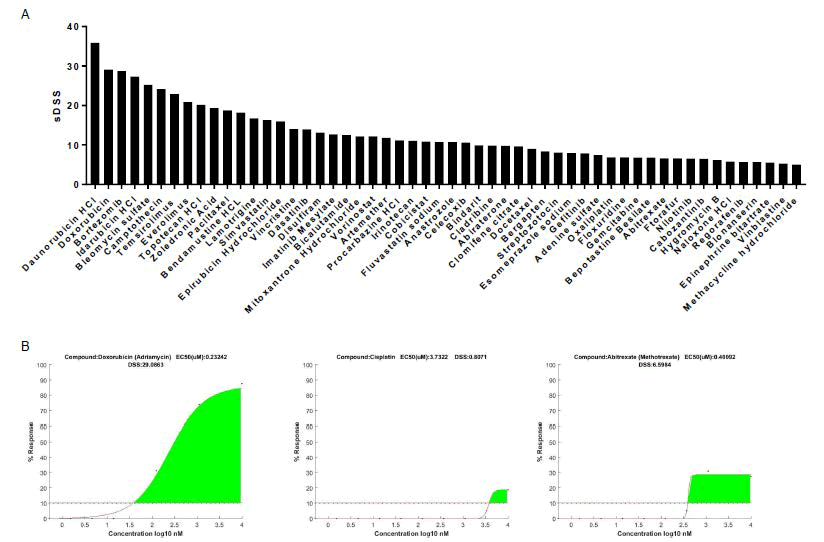
Figure 1. Drug sensitivity testing results. (A) Rank ordered compounds displaying sDSSmod value above the threshold; (B) Dose response curves of compounds used as part of MAP therapy.
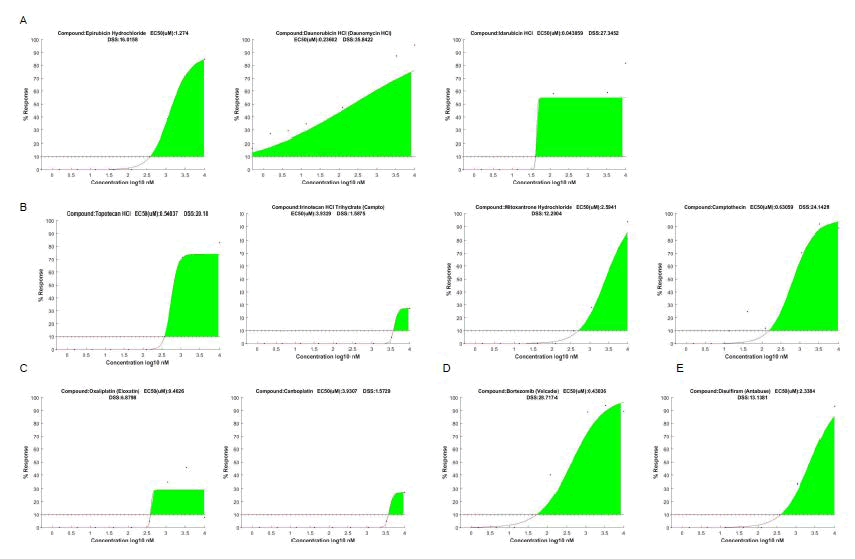
Figure 2. Dose response curves of compounds of interest. Dose response curves of (A) Anthracyclines; (B) Topoisomerase inhibitors; (C) Platinum compounds; (D) Bortezomib; (E) Disulfiram.
| Compound | DSSmod |
| Daunorubicin | 35.84 |
| Doxorubicin | 29.08 |
| Bortezomib | 28.71 |
| Idarubicin | 27.34 |
| Bleomycin | 25.25 |
| Camptothecin | 24.14 |
| Temsirolimus | 22.89 |
| Everolimus | 20.86 |
| Topotecan | 20.18 |
| Zoledronic acid | 19.31 |
| Paclitaxel | 18.75 |
| Bendamustine | 18.21 |
| Lamotrigine | 16.7 |
| Simvastatin | 16.3 |
| Epirubicin | 16.01 |
| Vincristine | 14.01 |
| Dasatinib | 13.98 |
| Disulfiram | 13.13 |
| Imatinib mesylate | 12.7 |
| Bicalutamide | 12.47 |
| Mitoxantrone | 12.2 |
| Vorinostat | 12.19 |
| Artemether | 11.82 |
| Procarbazine | 11.16 |
| Irinotecan | 11.04 |
| Cobicistat | 10.83 |
| Fluvastatin | 10.74 |
| Anastrozole | 10.73 |
| Celecoxib | 10.58 |
| Bindarit | 9.88 |
| Cladribine | 9.83 |
| Abiraterone | 9.79 |
| Clomifene citrate | 9.63 |
| Docetaxel | 9.03 |
| Bergapten | 8.41 |
| Streptozotocin | 8.03 |
| Esomeprazole | 7.92 |
| Gefitinib | 7.86 |
| Adenine sulfate | 7.45 |
| Oxaliplatin | 6.87 |
| Floxuridine | 6.85 |
| Gemcitabine | 6.76 |
| Bepotastine besilate | 6.76 |
| Abitrexate | 6.59 |
| Ftorafur | 6.58 |
| Nilotinib | 6.55 |
| Cabozantinib | 6.48 |
| Hygromycin b | 6.17 |
| Naloxone hcl | 5.8 |
| Regorafenib | 5.67 |
| Blonanserin | 5.66 |
| Epinephrine bitartrate | 5.5 |
| Vinblastine | 5.27 |
| Methacycline | 5.02 |
Table 2. DSSmod values.
Other classical chemotherapy drugs, such as bendamustine, paclitaxel, vinblastine, vincristine, floxuridine, oxaliplatin, methotrexate and gemcitabine, displayed DSSmod values above threshold, however, they were not among the top 10 compounds.
The screen also revealed significant treatment responses to disulfiram (DSSmod=13.13), a compound that has recently come into the focus of the osteosarcoma research community (Figure 2E) [9].
Of the compounds used clinically as part of the adjuvant MAP regimen, doxorubin displayed the largest treatment efficacy on the screen with a DSSmod value of 29.08 and around 85% maximum cell killing (Figure 1A and 1B). Both cisplatin and methotrexate (abitraxate) on the other displayed only limited efficacy on the screen with a DSSmod of 3.73 and maximum cell killing below 20%, and a DSSmod of 6.59 and maximum cell killing around 30%, respectively. The low response rate observed in response to treatment with cisplatin is consistent with the other platinum compounds present in the screening library, oxaliplatin and carboplatin. While oxaliplatin displays a response above threshold with a DSSmod of 6.87 and maximum cell killing around 30%, carboplatin displays a below threshold response with a DSSmod of 1.57 and maximum cell killing around 30%, (Figure 1A and 2C).
Treatment-induced toxicities are of significant concern for pediatric cancer patients undergoing chemotherapy treatment as they are often dose-limiting and can potentially affect patients for long periods of time. While exhaustive information exists on tissues where treatment-induced toxicities can be dose-limiting such as blood and gut, little information exists in normal bone cells. To evaluate cancer specificity and normal tissue toxicity, the DST screen integrates normal osteoblast responses to treatment with the compound library, resulting in the sDSSmod (Figure 3A). Positive values above threshold indicate high levels of cancer specificity and low normal tissue toxicity. While the sDSSmod should not be used to discount promising treatment candidates with high DSSmod values, the sDSSmod can distinguish between treatment with similar DSSmod but vastly different toxicity profiles. This can be specifically important in patients where multiple continuous treatments are not possible. Significant treatment responses were observed in normal osteoblasts in response to treatment with the screening library (Figure 3) [10].
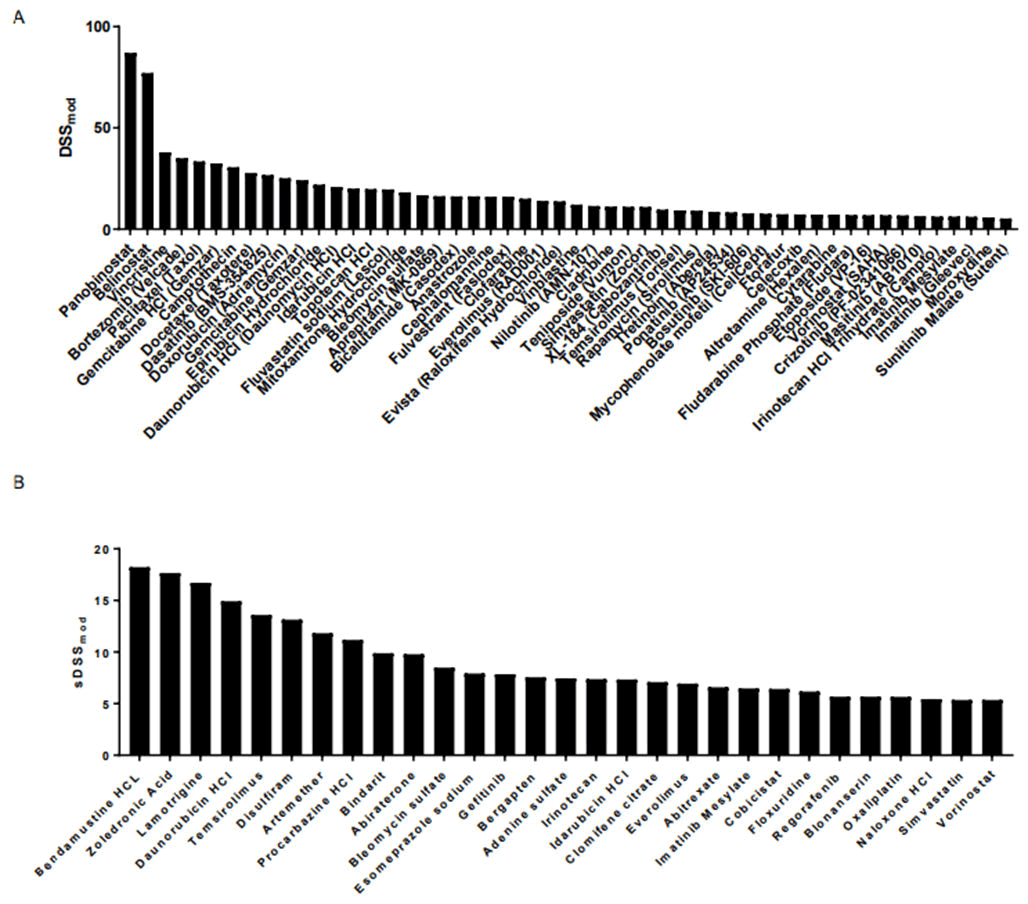
Figure 3. Normal tissue toxicity. Rank ordered compounds displaying sDSSmod value above the threshold in (A) Normal osteoblasts; (B) Patient sample.
The analysis identified 29 such compounds (Figure 3B and Table 3). Integration of normal tissue toxicity significantly alters the sensitivity profile. This is not surprising considering the normal tissue toxicity clinically observed in response to classical chemotherapy as well as targeted agents. The sDSSmod favors compounds such as antibiotics that generally display low toxicity. Notably, despite the high levels of toxicity generally associated with anthracyclines, daunorubicin (sDSSmod=14.92) and idarubicin (sDSSmod=7.33) show sDSSmod values above threshold. Doxorubicin (sDSSmod=3.84) on the other hand drops below the threshold due to its toxicity profile. The combination of low treatment efficacy and high levels of toxicity show cisplatin below threshold. Although both methotrexate and oxaliplatin display sDSSmod values above threshold, both compounds are found at the lower end with a sDSSmod=6.59 and sDSSmod=5.66, respectively. Surprisingly, disulfiram (sDSSmod=13.13) and temsirolimus (sDSSmod=13.58) display high levels of cancer specificity in this patient.
| Compounds | sDSSmod |
| Bendamustine HCL | 18.21 |
| Zoledronic acid | 17.66 |
| Lamotrigine | 16.7 |
| Daunorubicin HCl | 14.92 |
| Temsirolimus | 13.58 |
| Disulfiram | 13.13 |
| Artemether | 11.82 |
| Procarbazine HCl | 11.16 |
| Bindarit | 9.88 |
| Abiraterone | 9.79 |
| Bleomycin sulfate | 8.49 |
| Esomeprazole sodium | 7.92 |
| Gefitinib | 7.86 |
| Bergapten | 7.55 |
| Adenine sulfate | 7.45 |
| Irinotecan | 7.36 |
| Idarubicin HCl | 7.33 |
| Clomifene citrate | 7.08 |
| Everolimus | 6.94 |
| Abitrexate | 6.59 |
| Imatinib mesylate | 6.48 |
| Cobicistat | 6.43 |
| Floxuridine | 6.17 |
| Regorafenib | 5.67 |
| Blonanserin | 5.66 |
| Oxaliplatin | 5.66 |
| Naloxone HCl | 5.44 |
| Simvastatin | 5.35 |
| Vorinostat | 5.35 |
Table 3. sDSSmod values.
Pediatric osteosarcoma remains a challenging disease. Despite numerous completed and ongoing clinical trials developed by national and international cooperative groups, survival rates have not changed significantly over the past 30 years. The standard chemotherapy regimens for osteosarcoma are decades old and toxic, causing short and long-term side effects in a majority of patients. The side effects of treatment are significant (cardiomyopathy, renal injury, secondary malignancies, sterility) for this young population. Multiple trials testing additional or alternative drugs have failed to demonstrate improved outcomes over these established regimens. This may, in part, be due to the inherent heterogeneity within osteosarcomas and explain why morphologically and genetically identical sarcomas can have widely disparate behaviors and responses to therapy. DST can provide clinicians with tumor-specific response data to aid in treatment selection. The feasibility and clinical utility of the DST platform has Oncology & Cancer Case Reports, 2025, Vol.11, Issue 1, 1-7 Lohse I, et al. been previously demonstrated in a cohort of AML patients, showing the ex-vivo drug sensitivity screen provides robust data allowing for rapid clinical decision-making.
In the present case, the DST screen indicated significant treatment sensitivity toward anthracyclines and methotrexate, consistent with the first-line standard of care therapy MAP and the pathology results of 90% necrosis. Cisplatin, the third agent used in the MAP combination therapy, however, displayed low efficacy and DSSmod values below threshold. A number of anti-cancer agents outside of the standard-of-care regimen displayed significant efficacy on the DST screen. The mTOR inhibitors everolimus and temsirolimus as an example displayed strong anti-tumor effect, consistent with predictions based on genomic studies and cell culture. Of note, the cancer cells displayed significant treatment sensitivity towards the drug disulfiram, a compound that is FDA-approved as an alcohol abuse deterrent and has recently come into the focus of the osteosarcoma community. Although it is not commonly used for cancer treatment, disulfiram has shown anti-cancer effect in both in vitro and in vivo studies. The activity of disulfiram specifically in osteosarcoma patients will be further evaluated in a clinical trial out of the case comprehensive cancer center (NCT05210374).
Clinically, the patient displayed significant treatment responses with >90% tumor necrosis and negative margins. Nevertheless, the patient ultimately relapsed resulting in the need for further clinical intervention.
This pediatric osteosarcoma case shows that drug sensitivity testing of clinical osteosarcoma samples is feasible from a technical standpoint, can be performed in a clinically relevant time frame that does not delay treatment start, provides personalized drug sensitivity information on clinically available agents and the DST results align with the clinical treatment response. However, as previously shown for pediatric osteosarcoma patients, the response to standard-ofcare MAP therapy was short lived. Because this case was evaluated for feasibility rather than intent-to-treat our results cannot evaluate whether a regiment outside of MAP therapy would have been more successful or whether a second screen of the relapse would display resistance to MAP therapy.
This will be addressed in follow up studies specifically addressing these points in larger patient cohorts.
In this manuscript we present the case of a pediatric patient with osteosarcoma whose tumor was evaluated using DST screening concurrently with standard-of-care treatment. The drug screening results closely align with the clinical treatment response and outcome. Drug Sensitivity Testing (DST) has the potential to provide personalized plans based solely on the response of the specific patient’s tumor cells towards a library of anti-cancer agents. Using a patient’s tumor tissue for an ex-vivo drug screen can potentially identify favorable and unfavorable compounds for treatment of malignancies.
The authors have no conflict of interest to declare.
IL has performed the screens, quality control and helped with manuscript preparation and editing. GD has supported clinical data analysis and prepared the manuscript and editing. HA-A has performed the DST analysis and helped with manuscript preparation and editing. WA, DWC, MT, JCT have been involved in patient recruitment, consenting and clinical data collection. CW has supervised the project and secured funding.
All authors declare no financial or non-financial competing interests
The datasets used and/or analyzed during the current study available from the corresponding author on reasonable request.
This work was supported by the University of Miami Sylvester Comprehensive Cancer Center Molecular Therapeutics Shared Resource (MTSR) and the Sylvester Comprehensive Cancer Center Support Grant, 1P30CA240139-01. WA is supported through the Hyundai Hope on Wheels foundation. IL is supported through grants from the Hyundai Hope on Wheels foundation, the Sebastian Strong foundation and the Woman’s Cancer Association of the University of Miami. CW’s laboratory is currently publicly funded by NIH grants DA035592, DA035055 and AA023781, Florida Department of Health grants 6AZ08, 7AZ26 and 21L01 and the Wallace H. Coulter foundation.
[Crossref] [Google Scholar] [PubMed]
[Crossref] [Google Scholar] [PubMed]
[Crossref] [Google Scholar] [PubMed]
[Crossref] [Google Scholar] [PubMed]
[Crossref] [Google Scholar] [PubMed]
[Crossref] [Google Scholar] [PubMed]
[Crossref] [Google Scholar] [PubMed]
[Crossref] [Google Scholar] [PubMed]
[Crossref] [Google Scholar] [PubMed]
[Crossref] [Google Scholar] [PubMed]
Received: 29-Jul-2024, Manuscript No. OCCRS-24-143731; Editor assigned: 01-Aug-2024, Pre QC No. OCCRS-24-143731 (PQ); Reviewed: 15-Aug-2024, QC No. OCCRS-24-143731; Revised: 11-Aug-2025, Manuscript No. OCCRS-24-143731; Published: 18-Aug-2025, DOI: 10.35248/2471-8556.25.11(1).006
Copyright: © 2025 Lohse I, et al. This is an open-access article distributed under the terms of the Creative Commons Attribution License, which permits unrestricted use, distribution, and reproduction in any medium, provided the original author and source are credited.