
Case Report - (2025) Volume 11, Issue 4
Lung cancer accounts for the highest malignancy-related mortality and more recent advances in targeted and immunotherapy have demonstrated the pivotal role of a thorough diagnostic work-up for appropriate therapeutic decision-making and long-term clinical outcome. This especially applies to pulmonary adenocarcinoma which can be subclassified depending on the histological growth pattern, immunohistochemical staining and the molecular profile. Fetal Adenocarcinoma of the Lung (FLAC) is a rare subtype of pulmonary adenocarcinoma which comprises two pathologically distinguishable variants. In this case report we present a 65-year-old male who referred to our clinic with exertional shortness of breath, increased sputum, and one-sided upper arm paresis. The pathological examination of a well-demarcated oval mass with a cranio-caudal extension of 12 cm in the right upper lobe led to the diagnosis of High-grade Fetal Adenocarcinoma of the Lung (HFLAC).
Adenocarcinoma • FLAC • Histology • Immunohistochemistry • Staging
AE1/AE3: Anti-pan-cytokeratin AE1/AE3; ALK: Anaplastic Lymphoma Kinase; BRAF: Rapidly Accelerated Fibrosarcoma Homolog B; CT: Computed Tomography; EGFR: Epidermal Growth Factor Receptor; FEV: Forced Expiratory Volume; FLAC: Fetal Adenocarcinoma of the Lung; H and E: Hemotoxylin and Eosin; H-FLAC: High-grade Fetal Adenocarcinoma of the Lung, IASLC: International Association for the Study of Lung Cancer; ICD: International Classification of Diseases; KRAS: Kirsten Rat Sarcoma Viral Oncogene; L-FLAC: Low-grade Fetal Adenocarcinoma of the Lung; RET: RET Proto-Oncogene; ROS1: ROS Proto-oncogene 1; SALL4: Sal-like protein 4; TNM: Primary tumor, regional lymph nodes, distant metastases; TTF1: Thyroid-Transcription Factor 1, VO2max: Peak oxygen uptake; WHO: World Health Organization
Fetal-like lung tissue as part of primary lung cancer was first described by Barrett and Barnard in 1945. Its occurrence with surrounding altered mesenchymal stroma was termed pulmonary blastoma by Spencer in 1961. On pathological examination, lung tissue resembling fetal lung in the pseudoglandular stage without atypical mesenchymal stroma was observed by different authors since 1982, and was termed well-differentiated fetal adenocarcinoma of the lung by Kodama in 1984. Since 1999, Fetal Adenocarcinoma of the Lung (FLAC) is listed as a subtype of pulmonary adenocarcinoma by the World Health Organization (WHO). In its latest update, the WHO classification of lung tumors describes two histological variants of FLAC with distinct clinicopathological characteristics. Low-grade Fetal Adenocarcinoma of the Lung (L-FLAC) shows a pure pattern containing only tissue resembling the fetal lung, occurs mainly in young females, and has a good prognosis. High-grade Fetal Adenocarcinoma of the Lung (H-FLAC) which accounts for about 0.1-0.5% of all pulmonary neoplasms consists of at least 50% fetallike lung tissue but presents with other histological growth patterns of conventional pulmonary adenocarcinoma. It is disproportionately more prevalent in older males with a history of cigarette smoking, is more often diagnosed at advanced stages, and has an overall worse prognosis.
In this case report, we present a patient with a large primary tumor of the right upper lobe which turned out to be H-FLAC on pathological examination. A brief literature review on H-FLAC is conducted to point out the clinical importance of histologically characterizing pulmonary adenocarcinoma.
A 65-year-old male presented to our clinic with shortness of breath on exertion, mucinous sputum, and right-sided upper arm paresis. His past medical history included chronic obstructive pulmonary disease, arterial hypertension, inadequate sinus tachycardia, and dyslipidemia. He was on medical therapy with amlodipin, bisoprolol, acetylsalicylic acid, rosuvastatin, and indacaterol/glycopyrronium inhaler. Physical examination was notable for decreased breath sounds on auscultation and dullness to percussion of the right upper lung field. Abduction of the right upper arm was reduced without evidence of a sensory deficit or related pain. On laboratory examination, the patient had normocytic normochromic anaemia and a slight elevation of lactate dehydrogenase and c-reactive protein. On pulmonary function testing, we noted moderately severe chronic obstructive pulmonary disease with a FEV1 of 1,5 l and a forced vital capacity of 3,0 l. Chest x-ray showed a large demarcated oval mass of the right upper lobe with radiographic signs of chronic bronchitis and emphysema (Figures 1 and 2) [1].
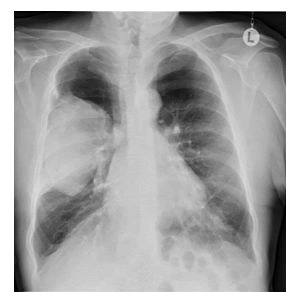
Figure 1. Chest X-ray, anterior posterior view showing the tumor in the right middle zone.
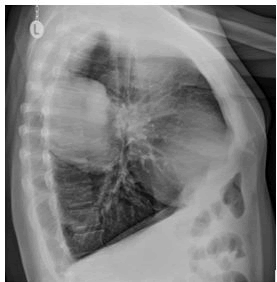
Figure 2. Chest X-ray, lateral view showing its demarcated growth in the right upper lobe.
Computed tomography (CT) of the chest was performed and showed a 12 × 10 × 8,5 cm3 lobulated mass of the right upper lobe with sharp margins (Figure 3) [2,3]. The dorsolateral border reached towards the chest wall and its medial portion appeared to compress the upper lobe segmental bronchi (Figure 4).
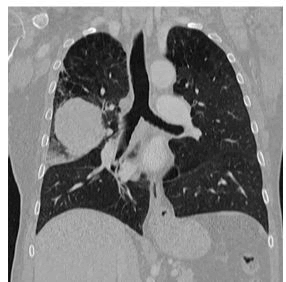
Figure 3. Chest CT, sagittal plane showing the craniocaudal extension of the tumor in the right upper lobe.
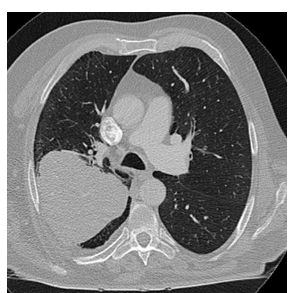
Figure 4. Chest CT, transverse plane showing infiltration of the dorsolateral chest wall and compression of the upper lobe segmental bronchi.
Notably, the tumor crossed the pleural space towards the sixth, seventh, and eight intercostal space without infiltrating the surrounding ribs [4]. Corresponding to the reported right upper arm weakness, atrophy of the pectoralis major was described on CT report. Bronchoscopy including broncho-alveolar lavage and brushing was performed on which no evidence of endobronchial tumor growth or malignant cells on microscopy. A CT-guided puncture below the right scapula was subsequently performed. Pathological examination of the specimen including staining with Hemotoxylin and Eosin (H and E), immunohistochemistry, and molecular analysis followed. On microscopic examination, homogeneous cuboidal, non-ciliated cells arranged to form tubular glands resembling fetal lung tissue were detected (Figure 5a). Most cells had a clear cytoplasm and a large nucleus with adjacent vacuoles. The glands were surrounded by acinar and papillary cell proliferates characteristic of invasive non-mucinous adenocarcinoma [5]. Assessment for mesenchymal abnormalities like myxoid stroma was negative. Immunohistochemistry was positive for Thyroid Transcription Factor-1 (TTF-1, Figure 5b), cytokeratin AE1/AE3, p53, SALL4, β-catenin (Figure 5c), and Alpha Fetoprotein (AFP, Figure 5d) [6].
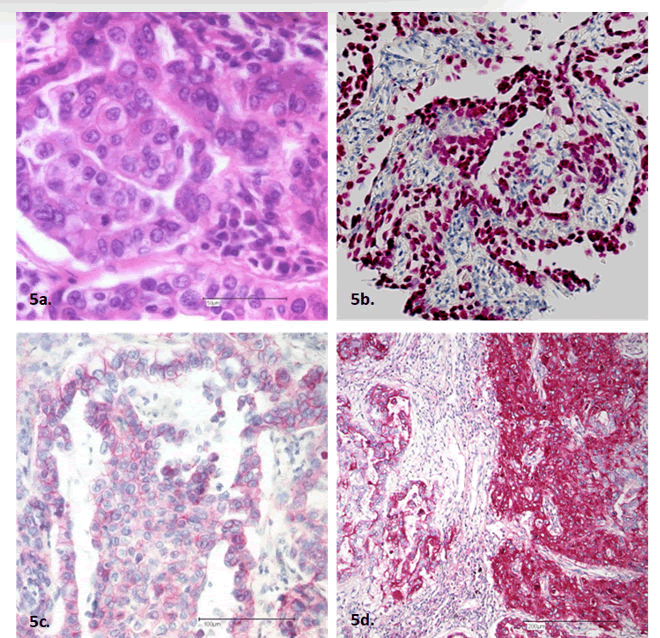
Figure 5. (A) H and E staining, cuboidal cells forming tubules resembling fetal lung tissue of the pseudoglandular stage. (B) Immunohistochemical staining, nuclear positivity for TTF-1. (C) Immunohistochemical staining, membranous positivity for betacatenin. (D) Immunohistochemical staining for alpha fetoprotein.
Molecular pathology with next-generation sequencing revealed no genetic abnormalities of EGFR, KRAS, BRAF, ALK, ROS1, or RET. Staging was completed by performing bone scintigraphy, cranial CT, and abdominal ultrasound which showed no evidence of extrathoracic metastases. The tumor was classified as cT4N0M0 corresponding to stage IIIA according to the International Association for the Study of Lung Cancer (IASCL). To assess the functional operability of our patient, we performed a cardiopulmonary exercise test, in which the patient had a VO2max of 13 ml/ kg/min. On ventilation/perfusion scintigraphy, we observed a matched deficit of the right upper lung field [7,8]. Our patient underwent R0 video-assisted thoracoscopic surgical resection of the right upper lobe and mediastinal lymphadenectomy. Despite our recommendations to undergo adjuvant platinum-based chemotherapy, he rejected any further treatment and was planned for regular controls.
In its latest update, the WHO classification of lung cancer listed FLAC as a subtype of pulmonary adenocarcinoma characterized by distinct histological and immunohistochemical features. Although being categorized with the same ICD-O code (8333/3), FLAC presents as two clinicopathological entities, called L-FLAC and HFLAC. Whereas L-FLAC occurs mostly in younger females, is often diagnosed at earlier stages, and has a good prognosis, H-FLAC is more often observed in older males with advanced disease and has an overall worse long-term survival. On H and E staining, H-FLAC presents with at least 50% atypical cells with large nuclei and clear cytoplasm which form tubular glands resembling fetal lung tissue. Immunohistochemically, H-FLAC typically stains positive for TTF-1, p53, alpha feto protein, and beta-catenin.In contrast to L-FLAC, in which beta-catenin is expressed inside the nucleus, H-FLAC shows a membranous pattern of beta-catenin expression. Genetically, this nuclear beta-catenin accumulation is explained by an aberrant Wnt signalling pathway in L-FLAC. Microscopically, this is related to a morule formation which is normally absent in H-FLAC.11 Instead, HFLAC presents with other types of lung cancer, in most cases patterns of invasive adenocarcinoma. In our patient, a growth pattern of acinar and papillary adenocarcinoma was observed. Immunohistochemical staining was positive for nuclear TTF-1, cytokeratin AE1/AE3, SALL4, alpha feto protein, and membranous beta-catenin. Molecular pathological analysis including EGFR, KRAS, BRAF, ALK, ROS1 and RET was negative [9]. Compared to other subtypes of pulmonary adenocarcinoma, driver mutations seem to occur rather rarely in FLAC, and if so, predominantly affect EGFR. Depending on the disease stage, treatment options include surgical resection, chemotherapy, radiation, as well as targeted and immunotherapy. While successful down-sizing of the tumor with neoadjuvant chemotherapy has been described for H-FLAC, we decided for an initial surgical approach. In general, H-FLAC seems to have an overall worse prognosis compared to other types of lung cancers and shows a survival rate comparable to micropapillary adenocarcinoma. This could in part be explained by a more frequent pleural and lymphovascular invasion seen in H-FLAC. Currently, there is no broader consensus on the specific treatment of pulmonary fetal adenocarcinoma, therefore clinicians have to approach FLAC based on available guidelines of non-small cell lung cancer and case reports on this rare entity.
To conclude, this case report presents a patient with a macroscopically remarkable primary tumor of the right upper lobe which was diagnosed as H-FLAC, a rare subtype of pulmonary adenocarcinoma, on pathological examination. Its unique clinical features distinguishing H-FLAC from other pulmonary adenocarcinomas highlight the importance of a thorough pathological work-up to find an individualized treatment approach.
The authors declare no conflict of interest.
Informed written consent was received by our patient.
No funding was received.
[Crossref] [Google Scholar] [PubMed]
[Crossref] [Google Scholar] [PubMed]
[Crossref] [Google Scholar] [PubMed]
[Crossref] [Google Scholar] [PubMed]
[Crossref] [Google Scholar] [PubMed]
Citation: © 2025 Müller C, et al. This is an open-access article distributed under the terms of the Creative Commons Attribution License, which permits unrestricted use, distribution, and reproduction in any medium, provided the original author and source are credited.
Received: 08-Oct-2024, Manuscript No. OCCRS-24-149645; Editor assigned: 10-Oct-2024, Pre QC No. OCCRS-24-149645 (PQ); Reviewed: 24-Oct-2024, QC No. OCCRS-24-149645; Revised: 08-Oct-2025, Manuscript No. OCCRS-24-149645 (R); Published: 15-Oct-2025, DOI: 10.35248/2471-8556.25.11(4).016
Copyright:This is an open access article distributed under the terms of the Creative Commons Attribution License, which permits unrestricted use, distribution, and reproduction in any medium, provided the original work is properly cited.