Research Article - (2025) Volume 14, Issue 1
Ethnobotany is the study of people’s use of plants, including in healing traditions. Medicinal plants play an important role in different cultures and regions in preventing and treating human and animal diseases. This paper focuses on traditional medicinal plants used by local peoples of the Guilan Province, Northern Iran. This region has diverse climates and ecosystems, and these are reflected in the range of medicinal plants they use. People's traditional beliefs concerning the use of medicinal plants have been an important aspect of their application.
The current research aimed to identify the most important species of medicinal plants used by local peoples and apothecaries of a region northern Iran, including the parts used and the type of application in the treatment treating human and animal diseases.
This research on ethnobotanical and veterinary medicinal plants was carried out between 2020 and 2023 in Langroud and its surrounding villages, on the shores of the Caspian Sea in Guilan Province, Iran. After preliminary investigations and determination of the study area and references, the plants of this region were collected by a systematic-random method and were identified. An ethnobotanical study using structured questionnaires and interviews was conducted with traditional healers and local villagers, to document the traditional medicinal uses of plants for human consumption and in the treatment of animal disorders (including cattle and sheep).
A total of 420 plant species in 86 families were identified, in this study. The medicinal plants collected totalled 165 species in 58 families. Leaves were the plant part found to be the most widely used in curing both livestock (43%) and human (35%) diseases. Aerial parts (15%), roots and underground parts (9%), flowers, fruits and seeds (each (5%) were also used in the ethno-veterinary medicines. Seeds (18%), flowers (12%), whole plants and roots and underground parts each (11%) were used in human medicine and healthcare. As medicines for people, these plants were mostly used to treat of digestive problems (36%), parasites (20%), wounds (24%) and fever (8%). In veterinary care, the common ailments treated were for treatment colds and sore throats (30%), digestive disorders (18%), liver disorders (17%), kidney disorders (10%), nervous disorders (5%).
Among the identified medicinal plants used to treat the disorders and discomforts of humans and animals in the study area, some are also used in other parts of the country. For example, Capsella bursa –pastoris (L.) Medik., Artemisia vulgaris L., Cichorium intybus L., and Stellaria media (L.) Cyr. are also used in the Tehran watershed for ethno-veterinary treatements. Punica granatum is used in the North Khorasan province; Solanum nigrum, Ricinus communis L., and Juglans regia L. are used in the Shahrbabak, Kerman province. Morus alba L., Ficus carica L., Plantago lanceolatae L. are used to treat human ailments in the Northeastern Persian Gulf watershed, and Cichorium intybus L., Nasturtium officinale R.Br., and Convolvulus arvensis L. are used medicinally in the Abhar, Zanjan province. As well, local people and attars use different parts of plants for medicine. Leaves and aerial parts and seeds are the most widely used parts. Notably, their use has a less negative effect on the survival of the plants harvested compared to the harvesting of their roots and bark.
Ethnobotanical medicines • Ethnoveterinary medicines • Medicinal plants • Iran • Langroud • Guilan
The use of traditional and local knowledge in the treatment of human and animal diseases, sometimes called “ethnic knowledge,” is unique for different peoples, both in the past and at present. Plants in any local region are considered as genetic reserves. People paid special attention to their surroundings, especially to the local plants, and have learned to use many different types for food, materials, medicines and other purposes. Worldwide, medicinal plants play an important role in the treatment of both human and animal diseases, and in fact, many manufactured commercial medicines today are based on traditional plant medicines. As well, livestock farmers have developed, traditional medicines for treating animal diseases. These are known as Ethnoveterinary Medicines (EVM), a term. first defined by McCorkle in a review of traditional veterinary practice. Ethnoveterinary medicine encompasses the knowledge, skills, methods of treatment and care of animals. often using native plants., Like the knowledge of human medicine, ethnoveterinary medicine knowledge is transmitted among native healers over generations.
Ethnobotany is the study of the relationships between plants and people, and focuses on the role of plants in particular region and cultures. Ethnobotany includes people’s knowledge of medicinal plants from different cultures and regions for the prevention and treatment of various diseases. Increasingly today people are using manufactured drugs to treat diseases due to their rapid response and quick effectiveness. However, with increasing industrialization, greater use of harmful chemicals and, the increase in diseases such as cancer, together with a fear of the effects from these drugs, people are still turning to the original herbal medicines used by their communities, in some cases for many generations.
Strong documented medical traditions are found in many parts of the world; Greek, Kampo, Chinese, Iranian, European and Arabic traditional medicines are just a few examples. In each region people collect local medicinal plants and use them, based on traditional information, for treating diseases. Examples include Sri Lanka, India and Vietnam. The present study is focused on Iranian medicine traditions. A high percentage of people in developing countries use traditional herbal medicines to treat themselves and even their animals. In terms of medicinal treatment of animals-ethnoveterinary medicine-significant research has been conducted globally.
Iran has diverse climates, including the rainy, temperate Hyrcanian forests in the North: Of the country, which is considered a rainy and temperate region, to the mountainous areas in the Alborz and Zagros mountain ranges, and the steppe habitats along the coasts in the south. The Persian Gulf of Iran has been recognized as a rich local for medicinal plants. People's traditional about on the health benefits of using medicinal plants and the long-standing origin of these uses provided an excellent platform for studying the use of medicinal plants in Iran's medical system.
People's use of medicinal plants in Iran is considered an ancient heritage that goes back to the Babylonian-Assyrian civilization. Since that time, traditional healers have sold medicinal plants in shops called Attari. In recent decades, much attention has been paid to collecting information in on herbal medicines from elderly, traditional healers, and among others, even including medicinal plant seller (Attars). Medicinal plants have also been used to treat domestic animals in Iran. A lot of research has been done on the identification and usage of medicinal plants by local residents in the villages of Iran by various researchers, some of them are mentioned below. In their studies in Abhar city of Zanjan province, Vafadar et al. mentioned 71 species of medicinal plants, whose most important use is for digestive disorders, which are used in the form of infusion or extract. Pourhashemi et al. identified 38 medicinal plant species in Zagros forests, whose leaves and flowers had the most medicinal uses. The most common method of preparing herbal medicine was orally and herbal tea in their research in Jiroft city of Kerman province recorded 132 species of medicinal plants, the most important use of which was as a pain reliever, anti-inflammation, stomach tonic and healing wounds in the research they conducted on the medicinal plants of Behbahan city of Khuzestan province identified 60 species of medicinal plants that are mostly consumed raw and herbal tea identified 64 medicinal plant species in Zarmroud Neka of Mazandaran province. The most medicinal use of these plants was reported in the treatment of digestive disorders, blood circulation and urinary system. In the studies of Dolatkhahi et al. in the north-east of the Persian Gulf, 70 species of medicinal plants were reported, and most of these medicinal plants were used to treat digestive problems. In Heydari et al. studies, which were conducted in Namarestagh summer rangelands of Amol in Mazandaran province, 74 medicinal plant species were identified. The most medicinal uses for the identified medicinal plants are the treatment of anemia, astringent, anti-flatulent, laxative and antipyretic, lowering blood sugar, cough and cold, and lowering blood pressure. Ahwazi et al. identified 11 medicinal plant species in their studies conducted in Alamut and Qazvin. Tabad et al. identified 56 medicinal plant species in their studies conducted in Zarivar region of Marivan, Kurdistan province. The most used of those plants was to treat digestive disorders. Naghibi et al. identified 45 species of medicinal plants in the villages of Hamedan province, which the local people used to treat diseases such as digestive disorders and infections [1,2].
Some information related to the medicinal properties of plants has been traditionally passed from one generation to another, identifying and collecting this information and recording it for herbal pharmacists and traditional medicine use in the future, is critically important. The current research was conducted with the aim of identifying medicinal plants species, and, with permission, collecting information from local people and apothecaries about the most important and widely used medicinal plants, including the parts used and the type of applications in the treatment of human and animal diseases. The results of this research can be of great help to pharmacogenic researchers with the aim of preparing medicinal products to the benefit of local people and future generations. Care must always be taken not to exploit this knowledge or use it inappropriately, and to ensure its ethical documentation and use.
Study areas
The studied area is Langroud and its surrounding villages on the shores of the Caspian Sea in Guilan Province, Iran (Figure 1). The district is located between 37°,05´eN and 37°,11´N, 50°,00´ and 50°,14´E. Economic activities in the region include agriculture (crops such as vegetables, tea and rice, cultivation of medicinal plants such as borage, mint), cultivation of ornamental plants and fruitful seedlings, handicrafts and animal husbandry. The most rainfall in this region occurs in autumn in September and October and in spring in March and April. In this area there is a part of the Hyrcanian forests. The average annual temperature is 20.6 and the average annual rainfall in this area is 1000 mm [3].
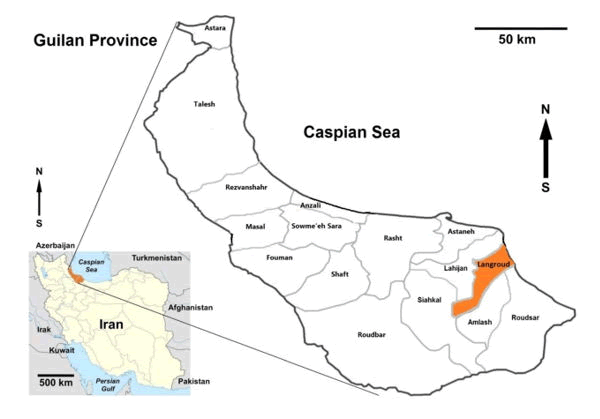
Figure 1. Study area, Langroud, Iran.
Data collection plant samples collection
The investigation of ethnobotanical and veterinary medicinal plants was carried out in Langroud between 2020 and 2023. the routes were identified by examining the topographical and geographical maps of the region and using the information of local people, and a suitable plan was prepared for field investigations and collection of plant samples. After preliminary investigations and determination of the study area and references, the plants of this city were collected by a systematic-random method (without frame and with theoretical observation) and were identified using reliable sources. Species were identified using reference flora, such as: Flora Iranica, Flora Iran, Colourful flora of Iran. Based on the study method, information such as Persian name, scientific name and dark name have been collected and prepared for all medicinal plants. In addition to the above information for traditional medicinal plants, information such as parts used, general and local uses of medicinal plants have also been prepared and written and are listed in Table 1. For determining the geographical distribution of plant species and life forms, Raunkiaer classification method was applied. for determining chorology of the identified folk herbal species were used. Medicinal properties and uses are also based on reliable sources of medicinal plants was reviewed [4].
Study methods
An ethnobotanical study was conducted to collect information on the traditional uses of plants for human consumption and in the treatment of animal disorders such as cow and sheep using structured questionnaires and interviews with traditional healers who were willing to share with their natives. To obtain ethnobotanical data, interviews did with 90 native people (who were familiar with medicinal plants in treatment humans and livestock) and Attars (sellers’ medicinal plants). by presenting a questionnaire to (a) Gender, (b) Age, (c) Educational status, (d) Local names of plants, (e) Method of harvesting, (f) Type of medicinal plants for disease treatment, (g) Parts of plants used, (h) Preparation method were among the items of this survey, (I) Therapeutic effects. A total of 90 people was interviewed, of which 36 were men and 54 were women. The age of the interviewees was from 45 to 80 years.
Diversity of medicinal plant species
During this research, a total of 420 plant species were identified, which belong to 86 families. The collected medicinal plants belong to 156 species and 57 families. Among the 156 species of medicinal plants, 25 (16%) species are used to treat livestock disorders and 42 (26%) species were used by native people to cure their diseases (Tables 1 and 2). The results of the analysis of the life form and chorology of plants in Ethno-veterinary showed that Hemicryptophytes with 53% and Throphytes with 31%, Pluriregional (34%) constitute the highest proportion, in Ethno-botany showed that Hemicryptophytes with 47% and Throphytes 23%, Pluriregional (38%) the highest percentage (Figure 2).
One of the investigated parameters was the level of education of the interviewees. Which 2.5% were illiterate, 73% had diploma education and 24.5% had university education. 66% of these people got the information from their relatives, 12% in relation to and talking to attars and 22%through the internet. Asteraceae (19%), Lamiaceae (11%) for ethno-veterinary, Brassicaceae (12%), Lamiaceae and Fabaceae each one with (9%) were used by local people for ethnobotany (Figures 3 and 4).
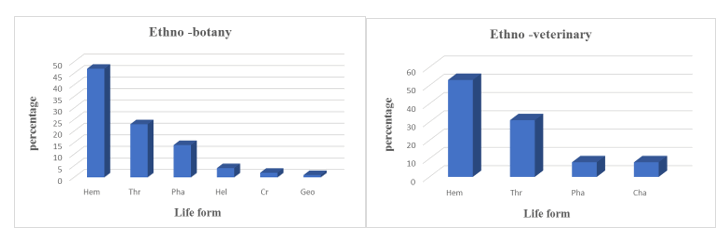
Figure 2. Life form in plant species in study area.
Note: C: Chamaephytes, Geo: Geophytes, H: Hemicryptophytes, P: Phanerophytes, T: Therophytes, Cha: Champhytes, Cr: Cryptophytes
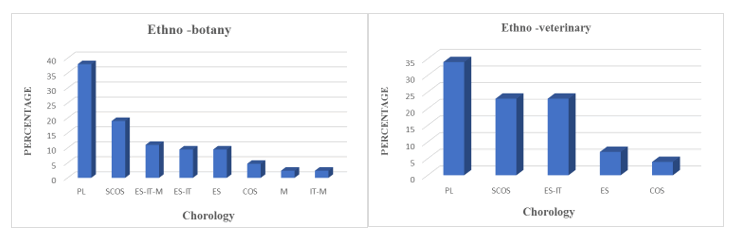
Figure 3. chorology in plant species in study area.
Note: Cosmopolitan (COS), Euro-Sibirian (ES), Irano-Turanian (IT), Mediterranean (M), Pluriregional (PL), Subcosmopolitan (SCOS).
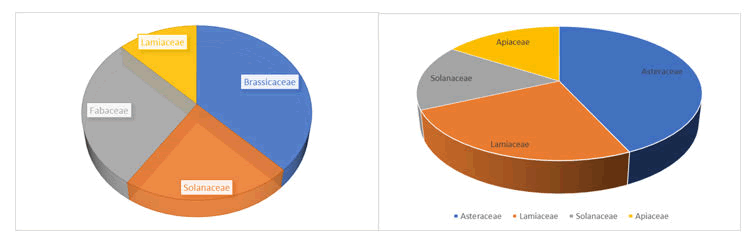
Figure 4. Most consumed plant families by local people for livestock and human consumption.
Plant parts used to treat diseases and their use method
The leaves were the most useful part in curing livestock (43%) and human (35%) diseases. Aerial parts (15%), root (9%), flower, fruit and seed each one with (5%) in the ethno-veterinary. Seed (18%), flower (12%), whole of plant and root each one with (11%) in the ethnobotany were used (Figure 4). There are many ways to use medicinal plants by people, two methods are brewed (to prepare the brew, pour some boiling water on the part to be used and close the lid of the container for about 15 minutes, after settling the scum, the brew can be used.) and the boiling method (we pour cold water on the plant and bring it to a boil. Then we boil it slowly for about 20 minutes. Boiling is for hard parts of the plant, materials that are not damaged by heat, or materials that do not dissolve easily in water, is used). The most common method of use is the decoction of medicinal plants: In the ethno-botany with 54% and in the ethno-veterinary with 38% (Figure 5).
| No | Scientific name and code | Family | Local name | Parts used | Uses | Method of preparation |
| 1 | Foeniculum vulgar Miller | Apiaceae | Badian | Fruit, aerial parts | Digestive problems | Powdered seeds and decoction of aerial parts |
| 2 | Centella asiatica (L.) Urb | Apiaceae | Ab boshghabi | Leaves | Fever | Decoction |
| 3 | Cichorium intybus L. | Asteraceae | Casni | Aerial parts | Endoparasites | Raw |
| 4 | Tagetes erecta L. | Asteraceae | Leaves | Bleeding | Decoction | |
| 5 | Arctium lappa L. | Asteraceae | Baba adam | Root | Mastitis | Raw |
| 6 | Artemisia vulgaris L. | Asteraceae | Dermaneh | Whole plant | Skin infection, zinc deficiency | Chew, ointment |
| 7 | Taraxacum officinalis Webber. | Asteraceae | Root and leaves | Gastrointestinal diseases | Decoction | |
| 8 | Anchusa italica Retz | Boraginaceae | Gavzaban | Root and leaves | Gastrointestinal diseases | Decoction |
| 9 | Capsella bursa –pastorris (L.) Medik. | Brassicaceae | Kise keshish | Whole plant | Infected and deep wounds | Ointment |
| 10 | Stellaria media (L.) Cyr | Caryophyllaceae | Ghanary seed | Aerial part | Increasing the laying of eggs | The dried aerial part was mixed with water and eaten after settling |
| 11 | Ricinus communis L. | Euphorbiaceae | Karchak | Leaves, seed | Skin infection, anti-constipation, laxative | Seed oil, oral |
| 12 | Chenopodium album L. | Chenopodiaceae | Salme | Whole | Treatment of diarrhea, wounds and injuries | Shape chew, decoction |
| 13 | Lotus corniculatus L. | Fabaceae | Yonje zard | Aerial parts | Endoparasites | Decoction |
| 14 | Juglans regia L. | Juglandaceae | Gerdo | Leaves | Antiparasitic | Decoction |
| 15 | Hypericum perforatum L. | Hypericaceae | Gole raeei | Flowers | Proud flesh, wounds | Ointment |
| 16 | Melissa officinalis L. | Lamiaceae | Badranjboieh | Leaves | Anxiety, stress | Decoction |
| 17 | Teucrium polium L. | Lamiaceae | Flowering branches | Gastrointestinal diseases | Decoction | |
| 18 | Plantago major L. | Plantaginaceae | Barhang | Leaves | Gastrointestinal diseases, wounds, hits or inflammations | The dried aerial part was mixed with water and eaten after settling |
| 19 | Avena sativa L. | Poaceae | Aerial parts | Mastitis | Chew | |
| 20 | Punica granatum L. | Punicaceae | Anar | Fruit | Diarrhea | Dried fruit shells |
| 21 | Datura stramonium L. | Solanaceae | Datoreh | Leaves and seeds | Infected wounds, parasite | Decoction |
| 22 | Urtica dioica L. | Urticaceae | Gazaneh | Seed | Minerals and vitamins and also, tannins, formic and salicylic acid | Dried |
| 23 | Oxalis corniculata L. | Oxalidaceae | Torshe vash | Leaves | Health tonic, dysentery | Raw |
| 24 | Solanum nigrum L. | Solanaceae | Tajrizi siah | Leaves | Food poisoning, dysuria, anti-parasite, fever, | Decoction |
| 25 | Verbascum punalense Boiss.et Bushe | Scrophulariaceae | Mahur,khargushak | Leaves and flowers | Snake bite treatment and ulcer healation | Ointment |
| 26 | Mentha pulegium L. | Lamiaceae | kotkoto | Leaves | Stomachache, anti-diarrhea | Fresh or dried leave |
Table 1. List of Ethno-veterinary medicinal plants used by local people in the villages of Langroud city, Guilan province, Iran.
| No | Scientific name and code | Family | Local name | Parts used | Uses | Method of preparation |
| 1 | Cichorium intybus L. | Asteraceae | Casni | Whole | Relieves facial acne, antipyretic, diuretic, blood purifier, treatment of liver disorders, blood fat reducer, anti-infection-jaundice, eczema, treatment of skin disorders | Raw and cooked, brewed, decoction |
| 2 | Brassica napus L. | Brassicaceae | Shalgham | Root | Cold | Cooked |
| 3 | Descurainia Sophia (L.) Schur. | Brassicaceae | Iranian khakshir | Seeds, flowers and leaves | Thirst quencher, sedative, anti-diarrhea | Decotion |
| 4 | Nasturtium officinale R.Br. | Brassicaceae | Bulag oti | Seeds, leaves and flowering stems | Stomach booster, blood purifier, expectorant, hair tonic, liver disease treatment, skin inflammation treatment | Raw, decoction |
| 5 | Sisymbrium officinalis (L.) Scop. | Brassicaceae | khakshir | Seed | Eliminate heatstroke | Fix by soaking |
| 6 | Sinapis arvensis L. | Brassicaceae | Khardal | Leave | Ease in digestion | Raw |
| 7 | Capsella bursa pastoris (L.) Medik | Brassicaceae | Kiseh keshish | Leaves, stems and sap, whole | Bleeding tourniquet, blood astringent, uterine bleeding treatment, vasoconstrictor and blood pressure increaser, dysentery treatment | Brewed and decotion |
| 8 | Silene conoidea L. | Caryophylaceae | Silen | Flower | Treatment of eye infection and pain | Topical use |
| 9 | Stellaria media (L.) Vill | Caryophllaceae | Canary seed | Leave | Disinfectants | Topical use |
| 10 | Convolvulus arvensis L. | Convolvulaceae | Field ivy | Leaves, roots and seeds | Anti-constipation, laxative | Brewed and decotion |
| 11 | Chenopodium album L. | Chenopodiaceae | Leave | Carminative, Hyperthermia | Powdered | |
| 12 | Euphorbia helioscopia L. | Euphorbiaceae | Farfion | Leave | Remove warts | Topical use |
| 13 | Ricinus communis L. | Euphorbiaceae | Karchak | Seed | Treating burns and disinfecting wounds, anti-constipation | Poultice (external use), seed oil as oral |
| 14 | Equisetum arvense L. | Equisetaceae | The tail of a field horse | The whole plant, especially the aerial parts | Diuretic, blood forming, healing, treatment of gout, antidiabetic, treatment of rheumatism and joint inflammation, treatment of kidney disorders, blood astringent | Brewed and decotion, ointment |
| 15 | Lotus corniculatus L. | Leguminosae (Fabaceae) | Yellow mung deer, crow's feet hay | The whole plant, especially the flowers | Insomnia treatment, anti-depressant, astringent, wound healing, antispasmodic, heart tonic | Raw, brewed and decotion |
| 16 | Melilotus officinalis (L.) Pall. | Leguminosae (Fabaceae) | Yonjeh zard | The whole plant, especially the flowering branches | Antispasmodic, hypnotic, diuretic, urinary tract disinfectant, anti-inflammatory, dysentery treatment, diuretic, pain reliever, antiflatulent | Poultice, brewed and decotion |
| 17 | Trifolium pratense L. | Leguminosae (Fabaceae) | Red clover | Branches flower | Disinfectant, analgesic, expectorant, wound and burn healer | Decotion, poultice, raw |
| 18 | Vicia sativa L. | Leguminosae (Fabaceae) | Mashek | Seeds and leaves | Treatment of fevers caused by smallpox and measles | Poultice, oral, |
| 19 | Linum usitatissimum L. | Linaceae | Katan | Seed | Blood circulation in the skin | Decoction |
| 20 | Mentha pulegium L. | Lamiaceae | Kotkoto | Leaves | Stomachache, vomiting, anti-diarrhea | Decoction, powdered |
| 21 | Lycopus europaeus L. | Lamiaceae | Wolf foot | Leave | Treatment of nervous discomfort and anxiety | Decotion |
| 22 | Melissa officinalis L. | Lamiaceae | Badranjboieh | Leaves and flowers | Calming and invigorating | Raw |
| 23 | Origanum vulgar L. | Lamiaceae | Margingosh | Seed | Sore throat and expectorant | Decoction |
| 24 | Lythrum salicaria L. | Lythraceae | Khoon Pham | Extract, poultice | Antidiarrheal, disinfectant, blood astringent | Extract, poultice |
| 25 | Juglans regia L. | Juglandaceae | Gerdo | Leave | Blood sugar, blood purifier, angina | Decoction |
| 26 | Hypericum perforatum L. | Hypericaceae | Raee flower | Leaves and flowers | Treatment of depression and some burns | Decotion |
| 27 | Epilobium hirstum L. | Onagraceae | Farfion | The whole plant, especially the leaves | Treatment of warts, anticonvulsant | Extract |
| 28 | Portulaca oleracea L. | Portulaceae | Korfeh | Branch | Thirst quencher and migraine headache reliever as well as blood purifier and diuretic | Raw |
| 29 | Plantago lanceolata L. | Plantaginaceae | Barhang | Root, leave, seed | Treatment of chest pus | Decoction |
| 30 | Punica granatum L. | Punicacea | Anar | Flower, fruit | Anti-diarrhea, bloating, upset stomach, flatulence, internal bleeding and as a stomach booster | Raw |
| 31 | Plantago major L. | Plantaginaceae | Barhang Kabir | Root, leave and seed | Relief of chest pain and cough, pain, in, anti-constipation, anti-inflammation of the gastrointestinal tract | Brewed and decotion, raw |
| 32 | Malva neglecta.wallr | Malvaceae | Barhang Kabir | Root, leave and seed | Relief of chest pain and cough, pain, in, anti-constipation, anti-inflammation of the gastrointestinal tract, laxative, anti-constipation, treatment of dysentery | Brewed and decotion, raw |
| 33 | Ficus carica L. | Moraceae | Anjir | Fruit | Treatment of constipation, treatment of tuberculosis, relief of cough and dry chest | Raw |
| 34 | Morus alba L. | Moraceae | Tot sefid | Leave and stem juice | Laxative | Raw |
| 35 | Solanum nigrum L. | Solanaceae | Tajrizi | Flowering branches | Sore throat treatment and chest softener | Decoction |
| 36 | Physalis alkekengi L. | Solanaceae | Doll behind the curtain | Fruit | Treatment of kidney disorders | Decotion |
| 37 | Datura stramonium L. | Solanaceae | Tatoreh | Dry leaves and seeds | Sedative and anticonvulsant | Decotion |
| 38 | Salix alba L. | Salicaceae | Bid | Flower | Bloating, upset stomach | Decoction |
| 39 | Cydonia oblonga Mill | Rosaceae | Beh, | Seeds | Relieving severe coughs and chest phlegm, expectorant | With warm water |
| 40 | Potentilla reptans L. | Rosaceae | Panj angosht | The whole plant, especially the rhizome and root | Astringent, healing, treatment of diarrhea, treatment of sore throat, treatment of pest and mouth ulcers, digestive system booster, blood purifier | Brewed and decotion |
| 41 | Urtica dioica L. | Urticaceae | Gazaneh | Leave | Diabetes, anti-diarrhea | Powdered decoction |
| 42 | Verbena officinalis L. | Verbenaceae | Shah Pasand Tabi | Flowering branch | Blood purification and fever reduction | Decoction |
Table 2. List of ethno-botany medicinal plants used by local people in the villages of Langroud city, Guilan province, Iran.
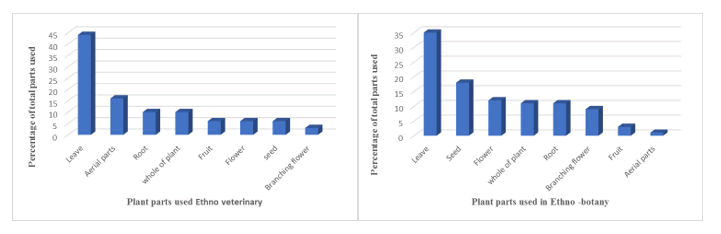
Figure 5. Ratio of use of different parts of medicinal plants to treat livestock and human problems in the villages of Langroud city, Guilan province, Iran.
Herbs were used to resolve livestock disorders and diseases such as ulcers, digestive disorders such as flatulence, stomach upset, diarrhea, external and internal parasites, blood purifiers, antiseptics, bone fractures, mastitis, general, tonic, breastfeeding enhancement, fever and pain. Medicinal plants were mostly used for treatment of digestive problems (36%), parasites (20%), wounds (24%) and fever (8%) in the ethno-veterinary and for treatment colds and sore throats (30%), digestive disorders (18%), liver disorders (17%), kidney disorders (10%), nervous disorders (5%) in the ethnobotany.
Medicinal plants used for livestock are mostly used by old people, which is relatively small and insignificant in young people, which is consistent with the research done in other areas. Among the identified medicinal plants that are used to solve the disorders and discomforts of humans and animals, some plants are also used in other parts of the country, such as Capsella bursa-pastorris (L.) Medik., Artemisia vulgaris L., Cichorium intybus L., Stellaria media L. Cyr. for ethno-veterinary used in the Tehran watershed. Punica granatum in the North Khorasan province, Solanum nigrum, Ricinus communis L., Juglans regia L. in the Shahrbabak, kerman province. Morus alba L., Ficus carica L., Plantago lanceolate L. for ethno-botany Journal of Biology and Todays World, 2025, Vol.14, Issue 1, 1-8 Rahmani A, et al. used in the Northeastern Persian Gulf watershed, Cichorium intybus L., Nasturtium officinale R.Br., Convolvulus arvensis L. in the Abhar, Zanjan province. Local people and attars use different parts of medicinal plants. The most used parts are leaves, which is consistent with the results. Leaves and aerial parts and seeds are the most used parts in ethno-botany and ethno-veterinary, which has a less negative effect on the survival of plants compared to the consumption of roots and bark of plants. Among the factors that affect the destruction of vegetation in the region, we can mention climate changes, which are the result of a decrease in rainfall, as well as the harvesting of plants and the indiscriminate grazing of livestock. However, many medicinal plants are destroyed in the villages to build houses and provide fodder for livestock, as well as for the expansion of agriculture. In order to preserve these plant species, farmers and ranchers should be trained, and even local people can plant some medicinal species, in addition to preserving it, it also generates income from an economic point of view. Many plants such as Mentha are used to treat digestive problems such as flatulence and diarrhea and Echium amoenum are used to relieve colds and nervous disorders. They are planted and sold by local people. The results showed that some plants, such as pomegranate, are used as food, but they are also considered as blood purifiers, Cydonia fruit is consumed orally, and its seeds are used to relieve colds along with chest phlegm, portulaca seeds It is used as a spice in baking bread, but its dry leaves are used in yogurt or only as a decoction to reduce blood sugar in diabetics [5].
Plant species may have several properties that have different uses in different regions, such as Urtica, which is used in our study area to reduce blood sugar in human consumption and to absorb minerals for livestock, while according to Guarrera et al. research, it is used to relieve digestive discomfort and Rheumatic pains are used. In studies in Mashhad, it is used to treat anemia and prostate problems. Ricinus communis is used to relieve constipation, it is similar to the usage in Mehrabad village of Kerman, which is not consistent with research in Kenya for diarrhea. Fresh leaves of Ricinus communis in the southern Ethiopia were used to treat mastitis. In Maharashtra: India for bone fractures, a paste is made from its leaves, which is used topically.
Local people in Langroud are used from leaves of Centella asiatica for the treatment of livestock fever as decoction and in Karantaka India they make a paste from the green leaves and apply it on the forehead during fever but in South Africa, leaves are used as a poultice locally to treat wounds, abscesses, and eye infections in cattles [6].
In this study, Punica granatum is used to strengthen the stomach, relieve stomach discomfort and internal bleeding, but researchers in India used to treat sexual disorders in women and relieve jaundice. The local people and even the Attars use the mint plant to treat digestive problems, although Mardaninejad mentioned such a thing in Mobarakeh, Isfahan, but the ethnobotanical study there shows that this plant is an appetite suppressant and a name treatment. Our study in ethno-veterinary showed that the Arctium lappa species has the effect of relieving mastitis, but in Mashhad studies, it is considered diuretic [7].
Malva neglecta in study area brewed and decotion, raw are used for Relief of chest pain and cough, pain, in, anti-constipation, antiinflammation of the gastrointestinal tract, Laxative, anticonstipation, treatment of dysentery, another research in South Africa were used for Constipation, wounds, abscess, cough as Decoction. Chenopodium album leaves are used topically in districts of the Himalayas of Pakistan, after boiling the leaves in mustard oil and crushing them, they are applied to the wounds, but in Langroud city, the leaves are powdered as an ethnobotanical antiseptic and the whole plant for treatment of diarrhea, wounds and injuries is used as chewing and decoction. The most used parts of the plant were the leaves, which is consistent with the research that was done in Lar Fars province, Iran, in the villages of Shahr Babak, Kerman province, Iran, in Karantaka India. The tea plant is planted in different parts of the world and is used as a drink. In Langroud, people use this drink as a brew every day, even when they have a headache. in Pakistan, a decoction of camellia sinensis leaves is used to treat cattle fever [8].
Among the best-selling plants in Attari, there are also medicinal plants that are not native to the region but were widely used, such as thyme, which is planted in the south of Iran and is used to cure colds. Pharmaceutical companies made cold syrup using this plant. Rosa damascena plant, which is used to calm nerves along with Lavandula, is cultivated in Isfahan region and is used in the preparation of rose water and perfume. Some plant species are used alone, such as Portulaca oleracea and Urtica dioica, to reduce blood sugar, and some are combined with several plants, such as medicinal plants used for kidney and liver disorders. In Attari, two plants, Alhagi maurorum Medik. and Tribulus terrestris L, are sold for the removal of urinary tract stones, which are not native here, but are widely used, so the aerial parts of these plants are boiled and consumed orally. It is also used for the treatment of severe colds as an herbal tea made from the leaves of Zataria multiflora Boiss and Hyssopus officinalis L. and the flowers of Althaea officinalis L. and Echium amoenum. Seeds of Descurainia Sophia L. and Ocimum basilicum L. together with Persian rose water (Rosa damascenae Mill.) are used as a drink to quench thirst in summer. Herbal tea is obtained by combining senna (Cassia angustifolia vahl.) leaves and Persian rose petals and boiling them, which is recommended for the treatment of chronic constipation. Also, an herbal tea is prepared by combining the aerial parts of Cichorium intybus L. and Fumaria parviflora Lam. and boiling them, which is recommended for purifying the liver and removing facial acne [9].
The most common way of using plants is boiled and infused, while herbal extracts (the effective substances of medicinal plants) are extracted in liquid form during a series of steps of boiling in water and cooling, either in a traditional way or under the supervision of the relevant health organization. Sometimes decoctions have a bitter taste due to the ingredients in the plant, which are sweetened with a little honey. Herbs are usually used for two to three days, and if there is no improvement in the treatment, the herbalists recommend them to go to the doctor.
Some native people in the villages have tried to preserve medicinal plants by growing medicinal plants in their home gardens, Doctors of traditional medicine and some sellers of medicinal plants in Iran have high scientific and traditional knowledge. This study provides location identification of some valuable medicinal plant species which helps in their cultivation. The number of herbal pharmacies and the availability of medicinal plants and the low cost of their preparation compared to chemical drugs show the willingness of more people to use these plants. Plant organs, both vegetative (leaves, roots) and reproductive (flowers) in different plant species have effective medicinal compounds that are used in different ways. However, some herbs are used in combination or poultices. Identifying and introducing the flora of medicinal plants and traditional uses of these plants is the basis of various medicinal activities. By identifying the existing capabilities and introducing medicinal plants with local value, it is possible to provide the necessary information for the protection of natural resources by expanding the cultivation of medicinal plants based on the needs of domestic and international markets. What is promising is that in recent years’ traditional medicine is taught as scientific knowledge in universities and many doctors and people interested in traditional medicine take scientific courses.
Authors conceived designed and performed the experiments. Authors analyzed the data, wrote and approved the manuscript.
The authors would like to thanks the Professor Nancy Turner for providing valuable comments on this article.
The authors would like to thanks the native people and Attars in the villages of Langroud city for their cooperation and completing the questionnaire.
The authors declare no competing interests.
[Crossref] [Google Scholar] [PubMed]
[Crossref] [Google Scholar] [PubMed]
Received: 21-Nov-2024, Manuscript No. JBTW-24-153014; Editor assigned: 26-Nov-2024, Pre QC No. JBTW-24-153014 (PQ); Reviewed: 10-Dec-2024, QC No. JBTW-24-153014; Revised: 11-Feb-2025, Manuscript No. JBTW-24-153014 (R); Published: 18-Feb-2025, DOI: 10.35248/2322-3308.25.14.1.004
Copyright: © 2025 Rahmani A, et al. This is an open-access article distributed under the terms of the Creative Commons Attribution License, which permits unrestricted use, distribution, and reproduction in any medium, provided the original author and source are credited.