
Research Article - (2025) Volume 6, Issue 1
Type II gypsum products is easily fractured while type III can also susceptible to fracture by sadden blow, this can be prevented by adding reinforcing materials of chicken eggshell powder. Furthermore, it can be used as a biocompatible reinforcing material due to the high content of CaCO3. This study aims to determine the effect of adding 5% eggshells powder to type II and type III of gypsum products to measure impact strength, hardness and setting time.
Egg shell powder • Gypsum products • Mechanical properties
Gypsum product classify as a natural, powdered white material known as calcium sulphate dihydrate with chemical formula CaSO4·2H2O, have many applications in dentistry including as a cast, die and investment material. However still have many drawbacks like it’s consider a brittle material which made it subjected to fracture especially by sudden blow like dropping from hands [1].
Since eggshells can be an alternative material for cement because they are readily available in homes, poultry farms, and egg breaking companies. Eggshells are also less expensive than other materials. Reducing the quantity of clinker produced and the energy used in the manufacturing of portland cement also aids in lowering CO2 emissions from cement plants [2]. In addition to dry eggshell is used for feeding the animals because calcium is present in it in a maximum amount [3].
In this search, 160 samples were prepared by adding egg shell powder 5% concentration to dental plaster and dental stone. The egg shell powder prepared by washing the egg shell with distal water, dry it, put them in oven for 45 min then crush it with small mill (sliver crest, grinding degree 30-300 with rotating speed 28000 r/ min) to produce fine powder of egg shell. Ten samples from each group were prepared for measuring impact strength, hardness and setting time. Charpy test was used to measure the impact, the sample prepared based to ASTM A370 (10 mm × 10 mm × 55 mm) [4]. While, surface micro-hardness prepared based to ADA specification no. 25. Metallic mold with dimensions (40 mm in diameter and 10 mm in height) and the setting times was measured by Gilmore needles surface penetration test [5].
The results of descriptive statistics of micro-hardness of adding egg to plaster and stone showed highly significant decrease in the micro hardness of plaster with egg comparing to the control group while the effect of adding egg powder to the stone showed there was a medium effect despite p-value showed insignificant (Tables 1-3).
| Micro hardness | n | Mean | Std. deviation |
| Plaster control | 10 | 70.55 | 1.82 |
| Plaster with egg | 10 | 67.05 | 0.8 |
| Stone control | 10 | 88.35 | 3.25 |
| Stone with egg | 10 | 91.3 | 2.55 |
Table 1. Mean and std. of micro-hardness four groups.
| Micro-hardness | t | df | p | Cohen's d |
| Plaster control-Plaster with egg | 5.82 | 9 | <.001 | 1.84 |
Table 2. t-Test results of micro-hardness for plaster control and plaster with egg.
| t-Test for paired samples | t | df | p | Cohen's d |
| Stone control-Stone with egg | -2 | 9 | 0.077 | 0.63 |
Table 3. t-Test of micro-hardness for stone control and stone with egg.
The results of descriptive statistics for impact showed also insignificant decrease for impact when adding egg powder to the plaster comparing to the control group while highly significant increase with large effect size for stone with egg powder comparing to the control group (Tables 4-6).
| Impact | Stone control | Plaster control | Plaster with egg | Stone with egg |
| Mean | 1.8 | 2.12 | 2.09 | 2.48 |
| Std. deviation | 0.29 | 0.19 | 0.28 | 0.25 |
Table 4. Mean and std. of impact test for four groups.
| t-Test for impact | t | df | p | Cohen's d |
| Plaster control-Plaster with egg | 0.26 | 9 | 0.6 | 0.08 |
Table 5. t-Test of impact for plaster control and plaster with egg.
| t-Test for impact | t | df | p | Cohen's d |
| Stone control-Stone with egg | -4.98 | 9 | <.001 | 1.58 |
Table 6. t-Test of impact for stone and stone with egg.
While the results of initial and final setting time showed for all addition highly significant decrease in the setting time comparing to the control groups (Table 7-11).
| Setting time | Plaster control initial | Plaster control final | Plaster with egg initial | Plaster with egg final | Stone control initial | Stone control final | Stone egg initial | Stone egg final |
| Mean | 4.08 | 30.4 | 2.57 | 28.34 | 20.31 | 45.13 | 15.4 | 40.18 |
| Std. deviation | 0.08 | 0.07 | 0.1 | 0.15 | 0.06 | 0.06 | 0.06 | 0.07 |
Table 7. Mean and std. of setting time for four groups.
| Initial setting time | t | df | p | Cohen's d |
| Plaster control initial-Plaster with egg initial | 38.16 | 9 | <.001 | 12.07 |
Table 8. t-Test initial setting time (plaster control initial vs. plaster egg initial).
| Final setting time | t | df | p | Cohen's d |
| Plaster control final-Plaster with egg final | 42.27 | 9 | <.001 | 13.37 |
Table 9. t-Test final setting time (plaster control vs. plaster with egg).
| Initial setting time | t | df | p | Cohen's d |
| Stone control initial-Stone egg initial | 163.96 | 9 | <.001 | 51.85 |
Table 10. t-Test initial setting time (stone control vs. stone with egg).
| Final setting time | t | df | p | Cohen's d |
| Stone control final-Stone egg final | 143.11 | 9 | <.001 | 45.26 |
Table 11. t-Test of final setting time (stone group vs. stone with egg).
While FTIR test showed there were a chemical changes happened for plaster with egg powder and stone with egg powder (Figure 1-4).
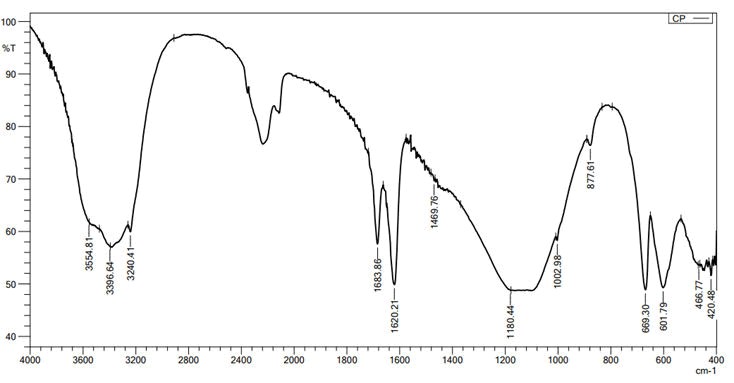
Figure 1. FTIR of plaster control group.
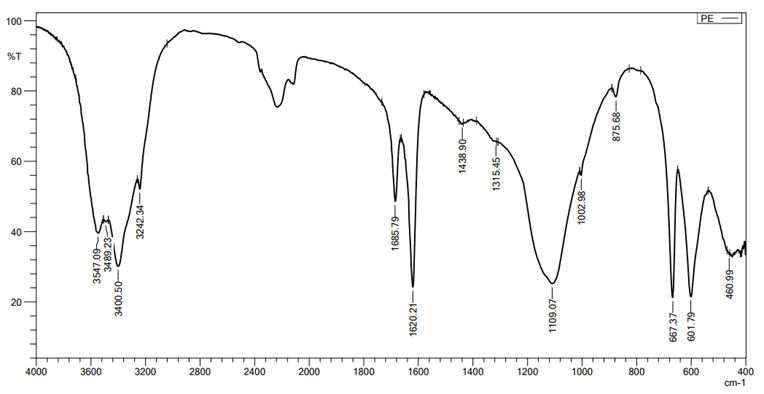
Figure 2. FTIR of plaster with egg powder.
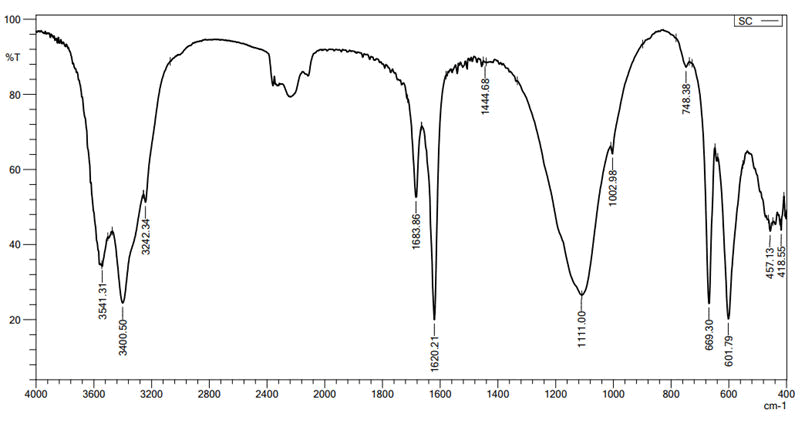
Figure 3. FTIR of stone control group.
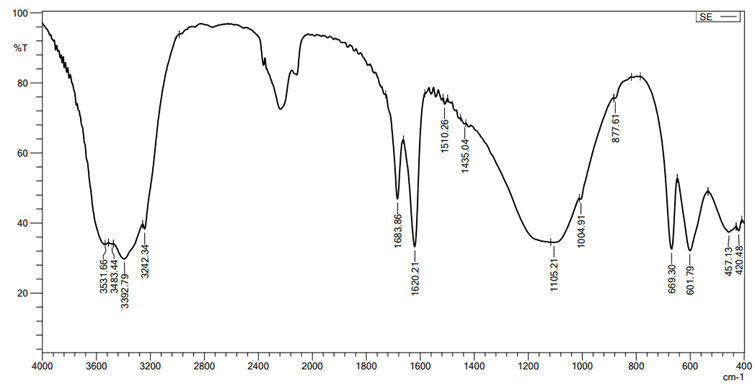
Figure 4. FTIR of stone with egg powder.
The anatomy of egg shell composes from calcium carbonate prisms, which is porous or semipermeable membrane in nature that allow for air pass through it [6]. This probably can explain the decrease in micro hardness due to increases the number of spaces among particles.
According to study done by Gajjar, R.A. and Zala, J. in 2018; showed in M25 grade concrete, slump value decreases as Egg Sample Preparation (ESP) percentage rises [7].
While Bhuvaneswari, M. in 2018; tested the mechanical properties of concrete mixed with egg shell powder and the results showed the compressive strength increases at concentration of egg shell 20%, however; at 25% there was decrease in compressive strength [8].
The study done by S. Sathvik, et al. in 2019; add coconut fiber and ESP at 5%, 10%, 15% and 20% to M30 grade concrete and the result of tensile strength increase but when the percentage of filler increase the tensile decrease [9].
The number of pores inside set material and the time needed to allow the material to be hard are the two factors that determine gypsum's strength, also the W/P ratio effect on the strength of material. Since Stone need less amount of water to start chemical reaction comparing to plaster which make stone harder than plaster [5].
Since one of the newest supplementary cementitious materials is powdered egg shell that could give a pure calcite [1].
The results showed decrease in the setting time this is probably due to its ability to form new partials which act as a nucleus for aggregation of gypsum product particles around it. These results agreed by other study when adding the egg shell powder to portland cement and formed center of nucleation which probably due to strong hydrogen bond.
It had been found that the chemical formula of egg shell involve iron, boron, copper and other mineral and only 4 percent is organic material, this may contribute to increase the impact of stone.
[Crossref] [Google Scholar] [PubMed]
[Crossref]
Received: 17-Aug-2024, Manuscript No. JGD-24-145688; Editor assigned: 20-Aug-2024, Pre QC No. JGD-24-145688 (PQ); Reviewed: 03-Sep-2024, QC No. JGD-24-145688; Revised: 21-Jan-2025, Manuscript No. JGD-24-145688 (R); Published: 28-Jan-2025, DOI: 10.35248/JGD.25.06(1).006
Copyright: © 2024 Karkosh ZSA, et al. This is an open-access article distributed under the terms of the Creative Commons Attribution License, which permits unrestricted use, distribution, and reproduction in any medium, provided the original author and source are credited.